
Injectidry Water Damage Restoration in Pearl River: A Homeowner’s Guide
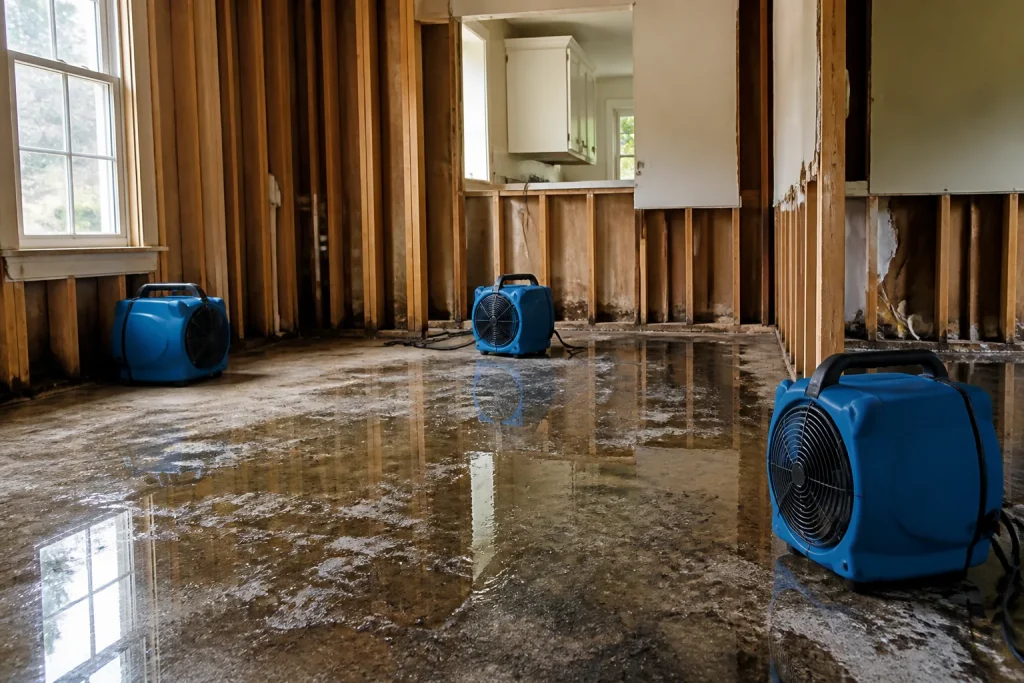
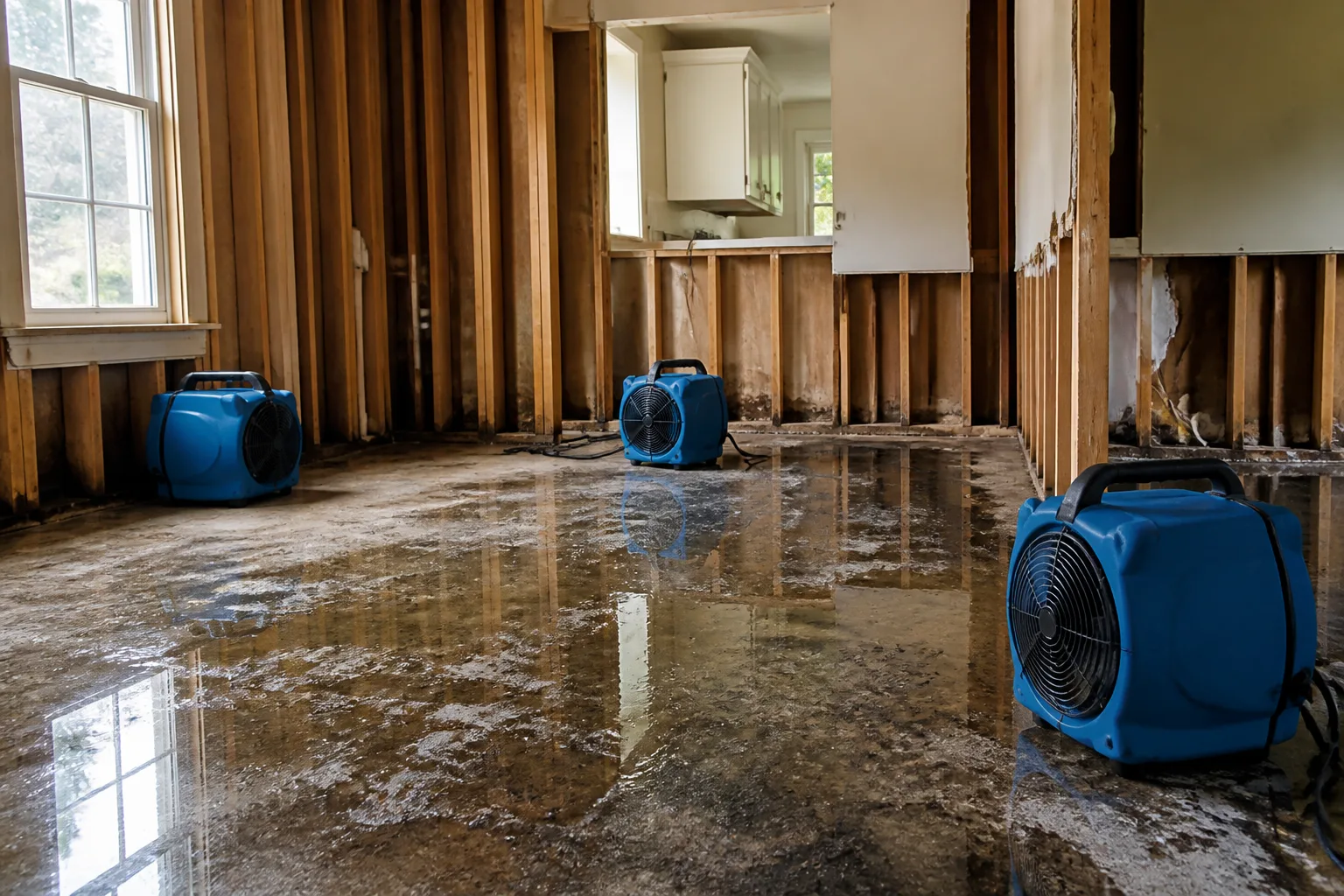
A dehumidifier pointed at a wet wall is like aiming a fan at a sealed jar. The surface feels dry by day three, but the moisture trapped inside the cavity has nowhere to go, and the mold clock starts ticking the moment the crew packs up. Injectidry systems solve this by pulling air through the wall cavity under negative pressure, which is why understanding how the system actually works matters when you’re standing in a wet basement in Pearl River at 11 p.m. trying to decide who to call. If you’d rather not sort through drying physics while your floors are wicking water, call us at (914) 935-7914 and we’ll start extraction the same visit.
Why Wall Cavities Stay Wet After the Surface Looks Dry
Here’s the misunderstanding most homeowners in Pearl River run into after a supply line bursts or a nor’easter drives water through a foundation. They borrow fans, run a dehumidifier, and after three days the drywall feels dry to the touch. Then six months later they smell must and find mold behind the baseboard. What happened is simple physics. Water inside a wall cavity sits between two layers of drywall and inside insulation, where there’s no meaningful airflow. Surface evaporation dries the outer paper layer of the drywall. The inside of the cavity stays humid because that moisture has to travel through the drywall itself to escape, and drywall is a terrible conductor of moisture. It takes weeks, not days, for that water to migrate out naturally, and by then mold has already taken hold. We see this pattern constantly in the older colonials and split-levels throughout the 10965 zip code, where dense-pack cellulose insulation holds water like a sponge and gives up that moisture far more slowly than fiberglass batts ever would. The IICRC S500 standard exists for exactly this reason: drying a structure isn’t about surface readings, it’s about getting the moisture content of the framing and insulation back to a specific dry standard. If your contractor isn’t checking inside the cavity, they’re guessing.
How Injectidry Actually Works: Negative Pressure, Panels, and Ports
Injectidry doesn’t wait for moisture to migrate out of a wall on its own. It pulls it out with controlled negative pressure. The system works like this: a technician drills small access ports into the wall cavity at regular intervals, attaches hoses to those ports, and connects those hoses to a manifold that routes to a vacuum system. That vacuum creates negative pressure inside the cavity, which draws air in from the surrounding room and pulls it through the insulation and framing. As that air moves through the wet material, it picks up moisture and carries it out. It’s the difference between leaving a wet towel in a closed bathroom with a fan running, versus wringing the towel out. The Injectidry panels and hoses do the wringing.
What separates a correct Injectidry setup from a shortcut is visible if you know what to look for. Ports need to be spaced close enough that no section of the cavity sits more than a foot or so from an access point. Ceiling cavities need their own ports, not just wall cavities. And the vacuum needs to be paired with dehumidification in the room, because pulling moisture out of the wall means putting it into the air, and that air has to be dried too. A trained technician also checks for double-plate construction in walls, which blocks airflow between stud bays, and drills separate ports for each bay when needed. We run Injectidry alongside Dri-Eaz and Phoenix dehumidifiers on most cavity jobs, and we map every port and panel location before we drill so nothing is left to chance and the homeowner can see exactly where the air is moving.
What a Legitimate Injectidry Moisture Log Looks Like
If you’re filing an insurance claim, the moisture log is the difference between an approved rebuild and a denied one. Carriers in Pearl River and across Rockland County have gotten stricter about cavity drying documentation, and a vague invoice that says “dried walls, three days” doesn’t cut it anymore. A proper log shows daily psychrometric readings: temperature, relative humidity, and the calculated grains per pound of moisture in the air, both inside the affected area and outside as a baseline. It shows the moisture content of the framing captured with a penetrating moisture meter, with target numbers for each material type. Wood, for instance, needs to return to its regional equilibrium moisture content, which in our climate typically lands between 8% and 12% depending on the season. Drywall needs to be below 1% on a non-penetrating scale, and insulation must fall within the dry standard for its type. S500 defines dry standard not as “feels dry” but as the point where the material has returned to its pre-loss moisture content and is no longer losing moisture to the surrounding air. If a contractor can’t show you daily readings with dates and numbers, they weren’t doing controlled drying. They were hoping.
We hand every homeowner a copy of the moisture log at the end of the job, and we send the same log directly to the carrier. That log is your proof that the cavities were actually dried, not just surface-dried, and that proof matters when the adjuster asks why the drywall needs to come out or why the insulation needs replacement. Insurance companies respond to documentation. Moisture logs are documentation.
Pearl River Construction and Why It Changes the Drying Timeline
The housing stock in Pearl River isn’t uniform, and the age of the home changes how Injectidry needs to be configured. Many of the homes in the 10965 zip code were built in the 1950s through the 1970s, and a lot of them are colonials and split-levels with dense-pack cellulose insulation in the exterior walls. Cellulose is made from recycled paper fiber treated with fire retardant, and that paper content means it holds water aggressively. It also compacts over time, settling in the wall cavity and creating pockets where water collects and air doesn’t move easily. That’s a slower drying environment than a newer home with fiberglass batts, and it means the Injectidry system has to run longer and the ports may need to be spaced differently to account for the settled insulation. We’ve seen cellulose take four to six days to hit dry standard in a Pearl River colonial where a similar amount of water in a newer home with batts would be dry in three. Skipping that extra time isn’t an option. It’s the difference between a dry cavity and a mold problem that shows up next spring.
Split-levels add another wrinkle. The mid-level wall between the garage living space and the bedroom above often has blocking that interrupts airflow, and a technician who doesn’t account for that blocking will leave sections of the cavity wet. This is where training shows. Our crews are trained to IICRC, RIA, and IFA standards, and that training includes reading the framing before drilling, not just drilling on a pattern and hoping for the best. A real Injectidry setup adapts to the house. A shortcut setup adapts the house to the equipment, and the house always wins in the end.
How to Hold Any Contractor Accountable for Injectidry Work
You don’t need to become a drying technician to know whether the job is being done right. You need to ask three questions and look for specific answers. First: can I see the moisture map from day one, with readings from inside the cavities, not just the surface? If the answer is no, or if the map only covers the visible drywall, the contractor isn’t tracking what matters. Second: how often will someone be back to take readings, and will I get a copy of each day’s log? A legitimate drying job includes daily visits or at minimum remote monitoring with regular physical verification, and every visit generates readings. Third: what dry standard are you targeting, and how will you prove we hit it? If the contractor can’t name a target number for wood and for drywall, they’re not following S500 and they’re not doing controlled drying.
We’ve pulled Injectidry hoses out of jobs where another company had run them for five days with no moisture log and no target numbers. One garage over by the Pearl River Middle School area last winter: the homeowner had a pipe freeze and thaw, and the previous company set up fans, left a dehumidifier, and never opened a wall. The surface was dry. The cavity wasn’t. When we opened the wall, the insulation was damp to the touch and the framing read 22% moisture content. The homeowner had paid for drying that never happened. That’s the exact scenario the moisture log prevents, and it’s the scenario that makes us insistent on documentation with every job.
If you’re dealing with this right now and want to skip the learning curve, call us at (914) 935-7914. We’ll send a certified crew, start extraction the same visit, and set up the Injectidry system with a written moisture map before we drill. You’ll know what we’re doing and why, and you’ll have the log in hand when it’s done.
Related services in Pearl River: Water Damage Restoration in Pearl River, Mold Remediation in Pearl River, and Fire & Smoke Damage Restoration in Pearl River.
When Injectidry Isn’t Enough: What Else Needs to Happen
Injectidry is a cavity drying tool, not a replacement for the rest of the job. If the water sat for more than 48 hours before drying started, or if the water came from a sewage source, drying alone won’t solve the problem. You need antimicrobial treatment, and in many cases you need removal of the affected materials. Category 3 water, the kind that comes from a sewer backup or a toilet overflow, is a health hazard, and drying that material doesn’t make it safe. It gets removed and replaced. The same goes for insulation that has been saturated with contaminated water: no amount of negative pressure will make it clean. A proper restoration job in Pearl River starts with extraction, moves to controlled drying with Injectidry where cavities are involved, and ends with either restoration of the dried material or removal and rebuild of what can’t be saved. The moisture log tells you which path applies. If the numbers don’t come down over the drying period, the material comes out. That’s the decision the data drives, and it’s why the data matters. If you’re going through this with an adjuster, having those numbers means the rebuild gets approved the first time instead of after a month of back-and-forth.
Why We Use Injectidry and What It Costs to Run
We run Injectidry because it works on the cavities that other methods leave wet. It’s not the cheapest equipment to own or maintain, and that cost shows up in restoration invoices. In Pearl River, cavity drying with Injectidry typically adds a few hundred dollars per affected room to the overall drying cost, but it’s the difference between a room that’s actually dry and a room that looks dry. Most of the cost is in the monitoring: the daily visits, the readings, the log. That monitoring is what the insurance carrier is paying for when they approve the line item, and it’s what protects you when the adjuster questions whether the drying was sufficient. When we bill insurance directly, which we do on most claims, you see the same documentation the carrier sees. No surprises, no middleman, no playing messenger between us and your claim. We hand you a written scope before we start and a written log when we finish. That’s a square deal, and it’s the way we’ve done it for over 42 years of combined experience, built on a dispatch board, not a sales desk. We also back all of it with the 90-Day Done Right Promise. If it’s not right, we make it right. In writing. No arguing.
One more thing worth knowing: we answer the phone at 2 a.m. with a live person. Not a recording. A dispatcher picks up, gets your address, and starts a crew toward Pearl River. Because when you’ve got water moving through a wall cavity, the clock is already running.
The Bottom Line
Injectidry works because it doesn’t wait for moisture to migrate out of a wall on its own. It pulls that moisture out under negative pressure, and it does it fast enough to stop mold before it starts. But the system is only as good as the technician running it: the port placement, the cavity mapping, the daily readings, and the moisture log are what separate a dried house from a house that only looks dried. If you’re in Pearl River and you’ve got wet walls, wet ceilings, or a basement that took on water, the fastest way to a real answer is a phone call. Floodline Restoration Co. offers free estimates, and you’ll get a live person on the line at (914) 935-7914. From the Floodline Restoration Co. home page to the moment we hand you the moisture log, the job stays with one crew and one name, and it’s done right.
Frequently Asked Questions
Most cavity drying jobs in Pearl River run between three and six days. Homes with dense-pack cellulose insulation, common in the older colonials and split-levels of the 10965 zip code, tend to run on the longer end because that insulation holds water more stubbornly than fiberglass batts. The system comes down when the moisture log shows framing and drywall have hit S500 dry standard, not on a calendar date. Call (914) 935-7914 and we’ll give you a realistic timeline based on your home’s construction.
In most cases, yes. Water damage from sudden, accidental events like burst pipes or storms is typically covered, and cavity drying is a standard line item on restoration estimates. What carriers have gotten stricter about is proof: they want daily moisture readings and a documented dry standard before they’ll approve rebuild costs. The moisture log we hand you and send to your adjuster is that proof. We bill insurance directly, so you’re never stuck chasing reimbursement on your own.
A dehumidifier will dry the air in the room, but it won’t dry the cavity behind the wall. The moisture trapped inside has no airflow to carry it out, and mold can establish itself in 24 to 48 hours in the right conditions. Injectidry creates the airflow through the cavity that a room dehumidifier can’t. If the water stayed on the surface and never wicked into the wall, a dehumidifier might be enough. If the baseboards are wet, the wall is wet.
Ask for the moisture map from day one, confirmed daily readings with target numbers, and a written dry standard they’re working toward. If they can’t produce those three things, they’re guessing. Certification matters too: look for IICRC training at minimum, and RIA or IFA certification is a good sign. We run Injectidry with trained crews and hand you the log at the end of the job, because the log is the only proof that the drying actually happened.
Written by Curt Bowman, Owner at Floodline Restoration Co., serving Pearl River since 2010.
Need Damage Restoration Help?
Call Floodline Restoration Co. - licensed & insured, here with fast after-hours help in Pearl River.
(914) 935-7914