

Free visual inspection and a written scope of work before any mitigation begins - photos, moisture readings, and drying logs go in your claim file
The scope we write is the scope we bill. Anything new gets shown to you, in writing, before we touch it.
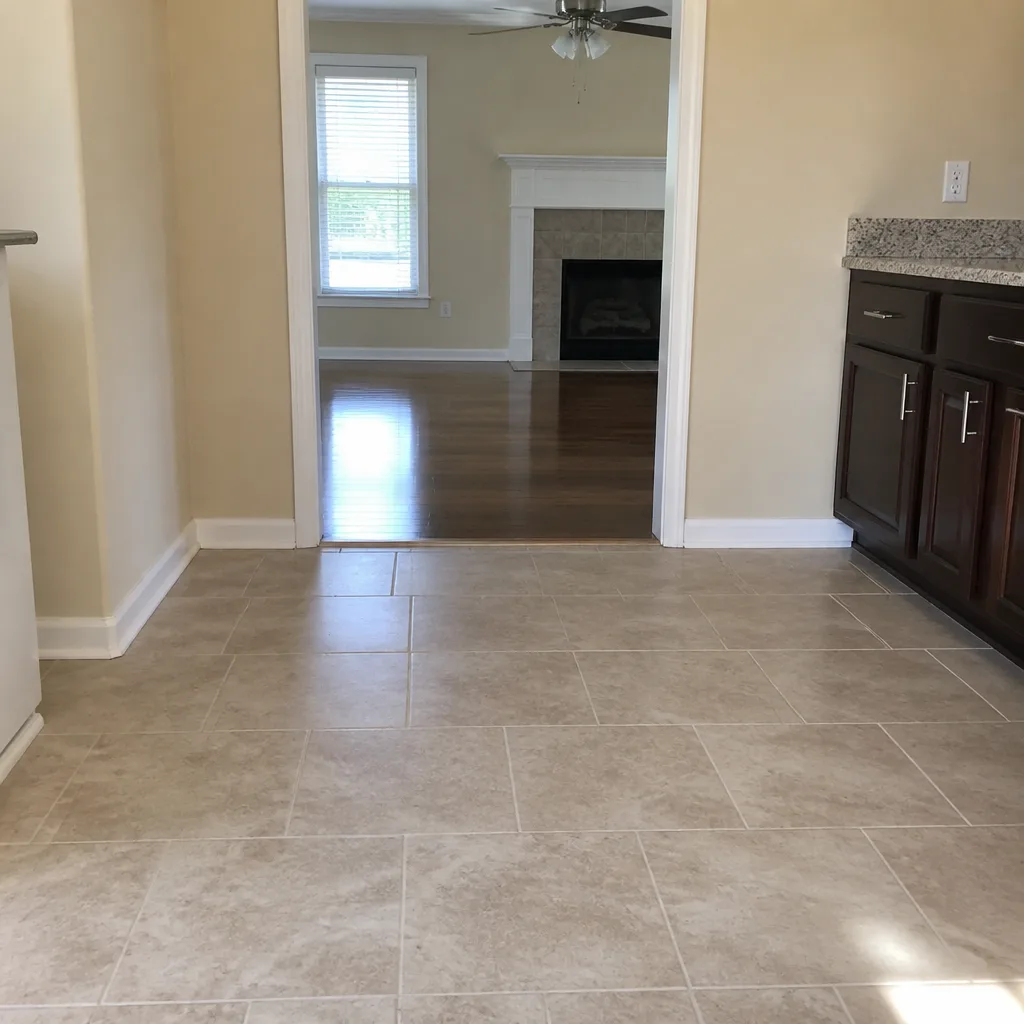
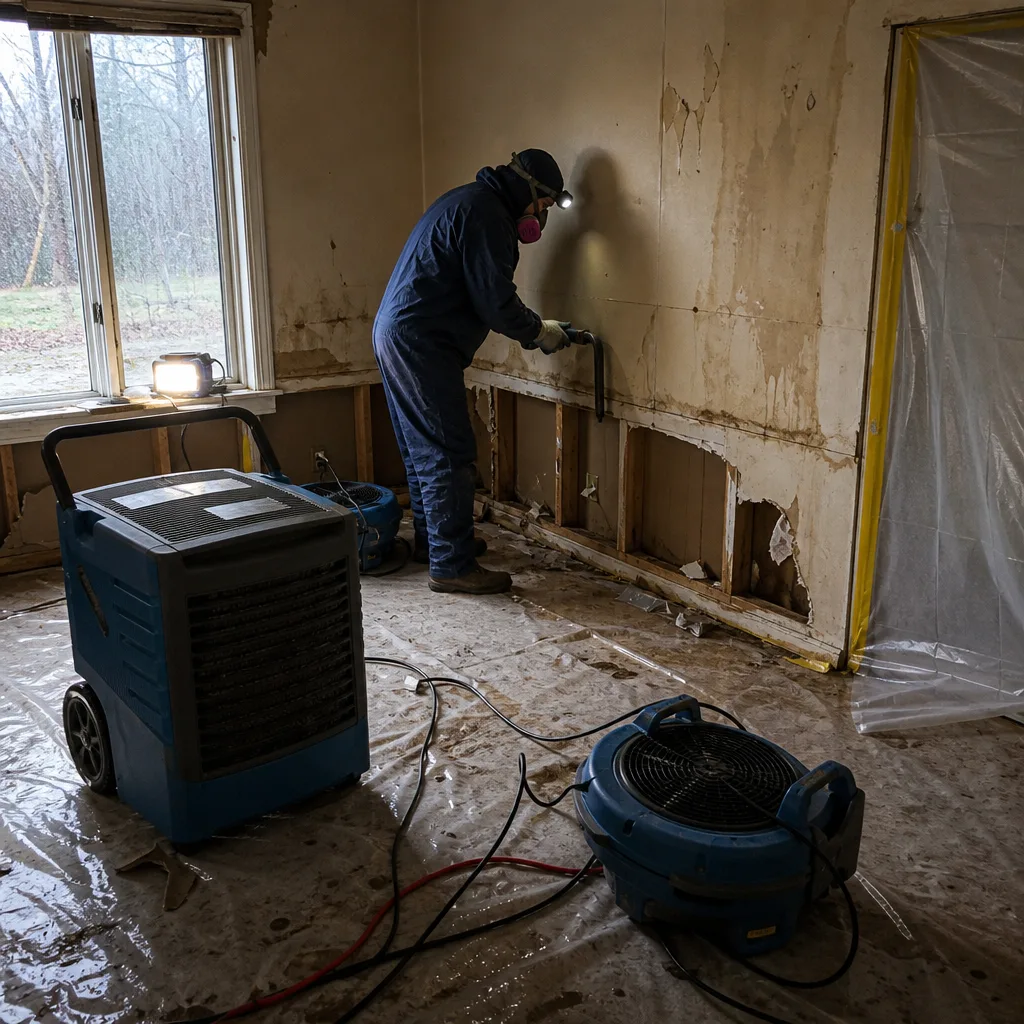 Before
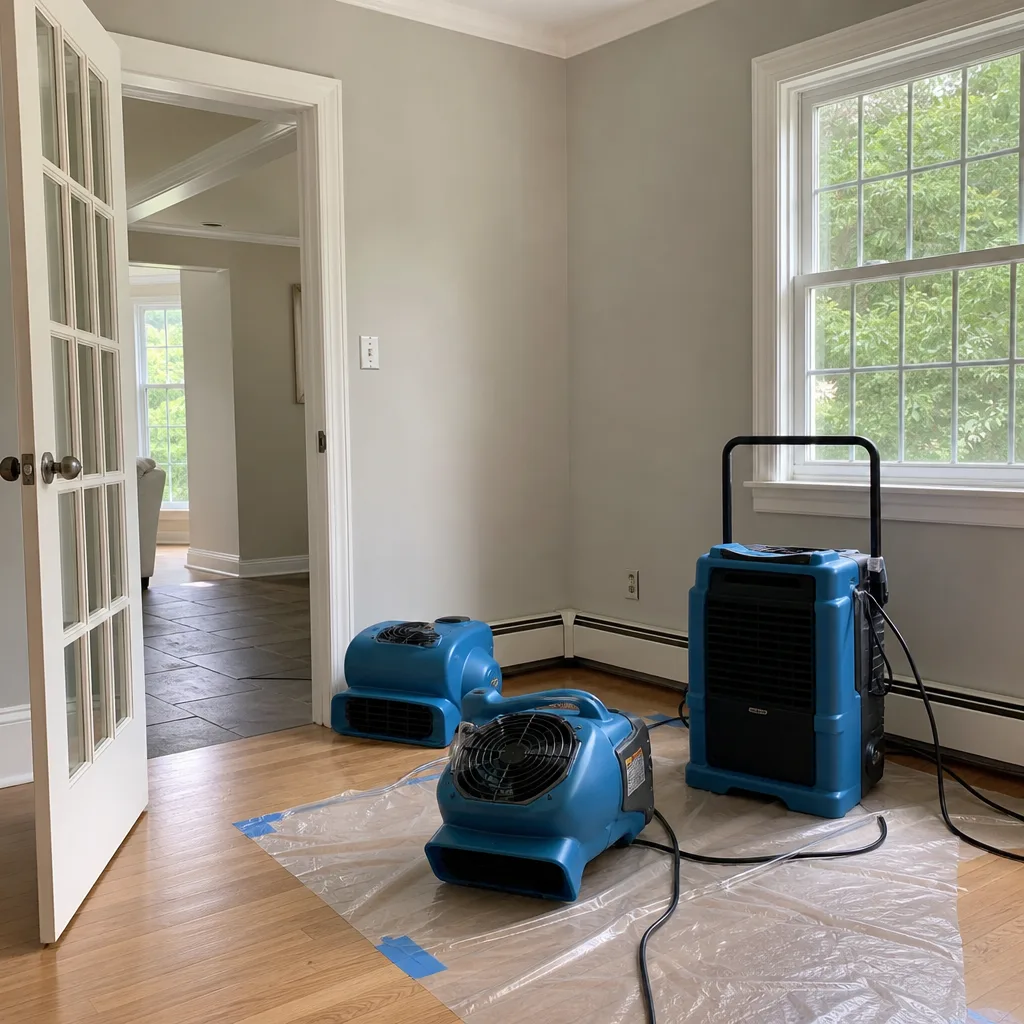 After
After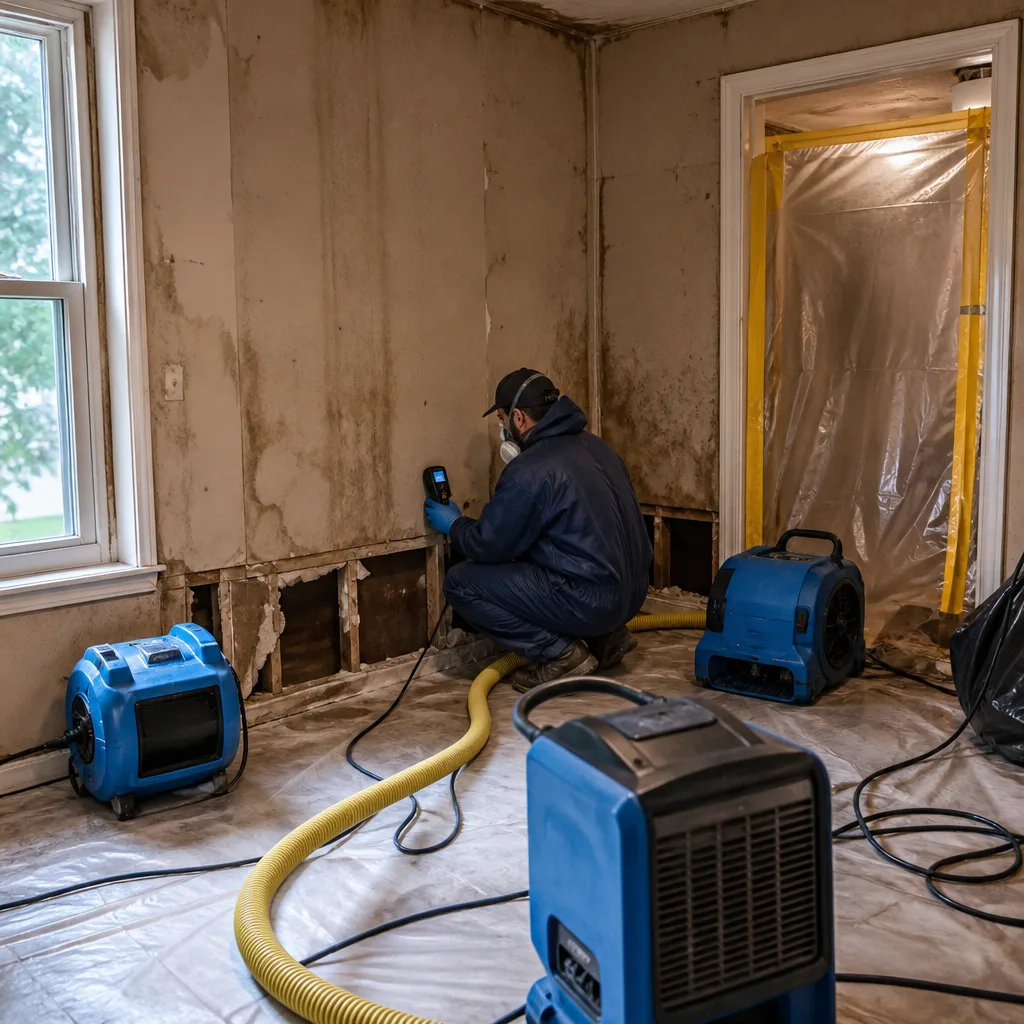 Before
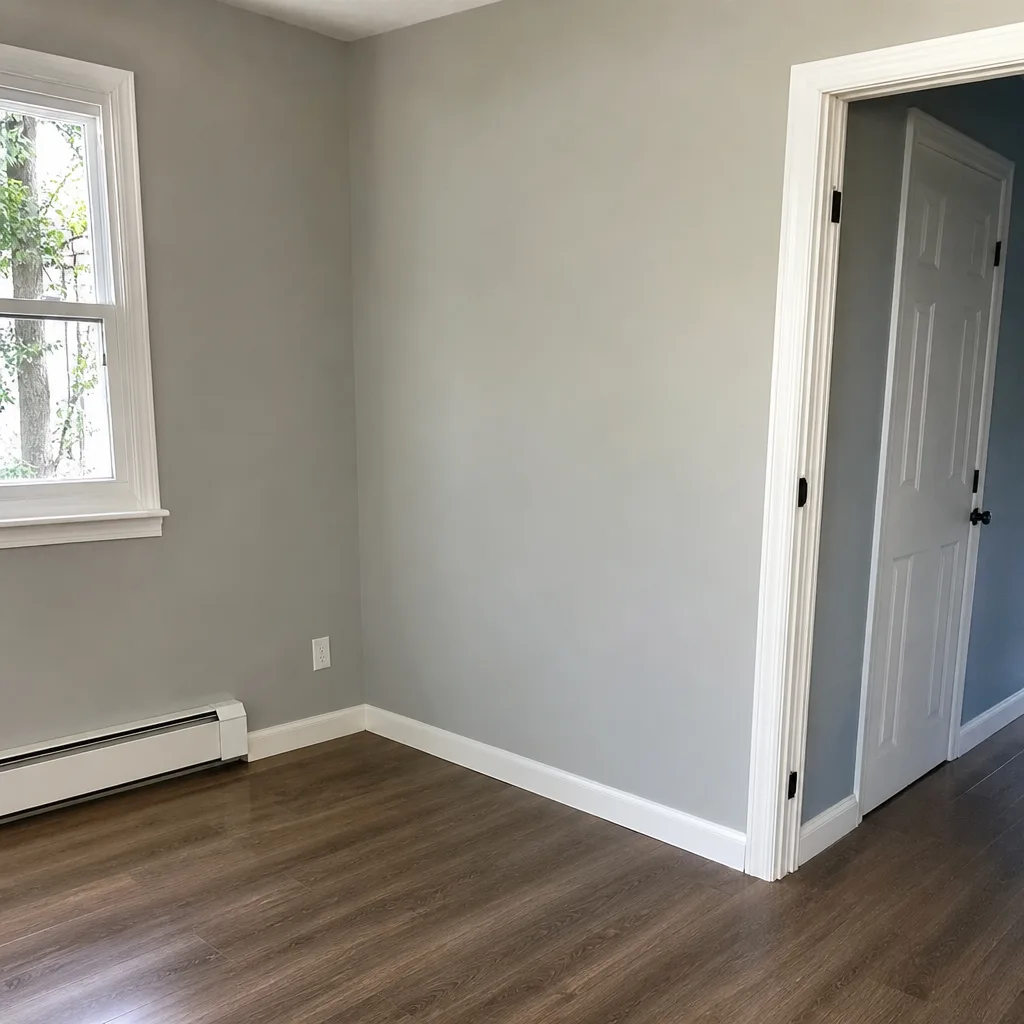 After
After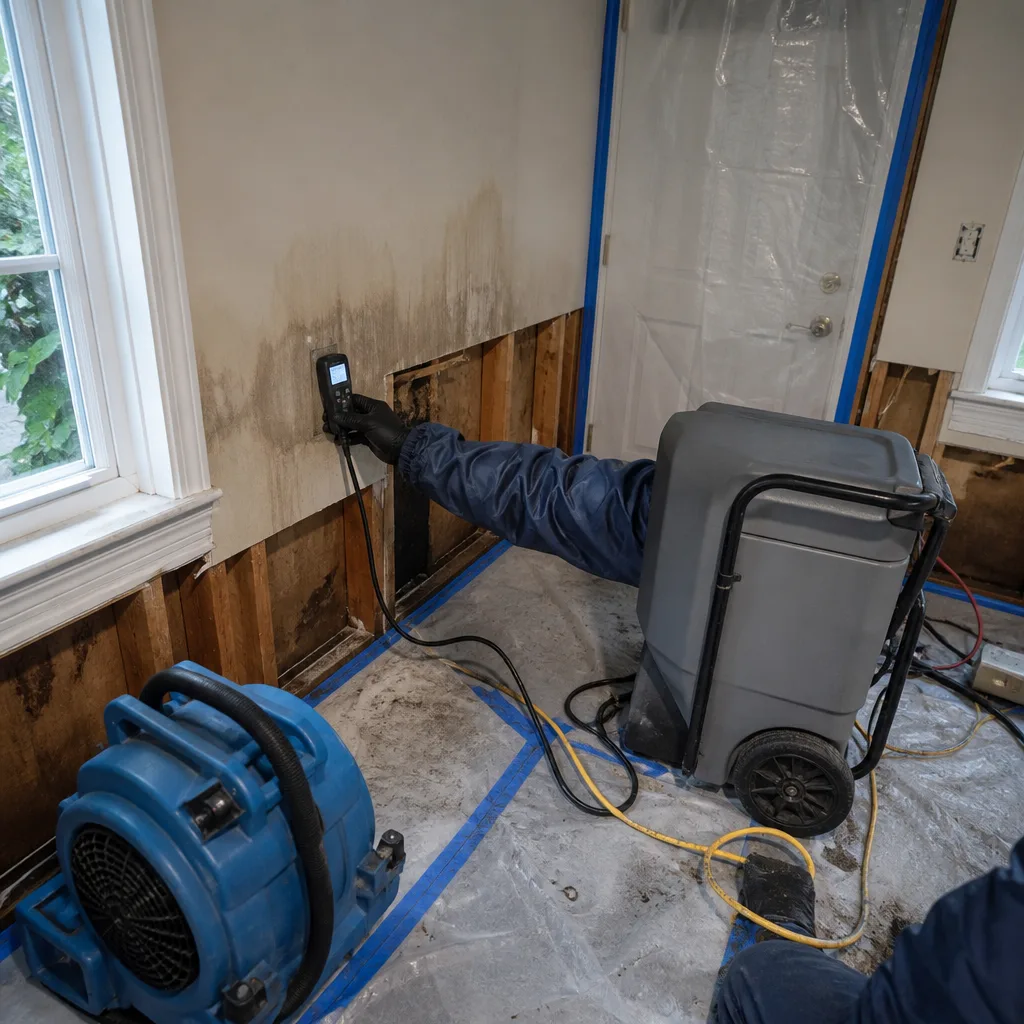 Before
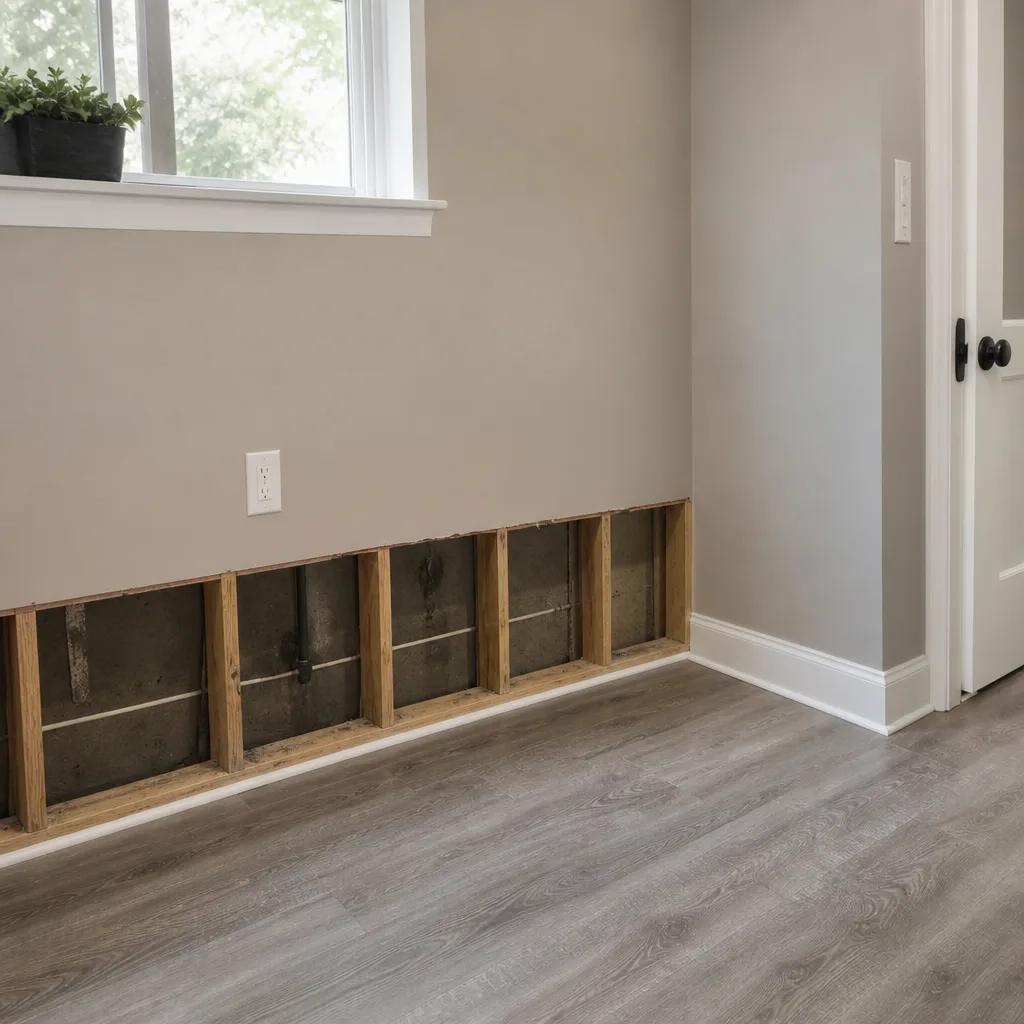 After
After24/7 Emergency Commercial Restoration in Park Ridge
Commercial water, fire, or storm damage in Park Ridge needs a response measured in hours, not days. Our crews arrive at properties throughout the borough within 45 minutes of your call, because a flooded retail floor or a smoke-filled office suite gets worse every hour it sits. Call (914) 935-7914 any time, day or night, and a live dispatcher will answer. We start extraction on the same visit, not the next morning, because the first hour determines how much of your inventory, drywall, and flooring can be saved instead of replaced.
Understanding Commercial Restoration Severity in Park Ridge Properties
Most commercial losses we handle in Park Ridge fall into three categories, and the severity drives the entire restoration plan. Category 1 water is clean, from a burst supply line or an overflowing sink. Category 2 carries significant contamination, often from appliance overflows or sump failures. Category 3, the one we see most along the Pascack Brook during nor’easter season, contains sewage, pesticides, and whatever else the flood picked up on its way through the watershed. That water requires full containment, antimicrobial treatment, and demolition of affected porous materials. The 1950s and 1960s commercial buildings common along Park Avenue and Kinderkamack Road add a second layer: original cast-iron drain lines, shallow floor assemblies, and vintage furring strips that wick moisture into places a moisture meter won’t find unless the tech knows where to look.
Why Park Ridge Property Owners Choose Floodline Restoration Co.
- 45-minute response commitment. We dispatch crews stationed near the Park Ridge area the moment you call, and a live person confirms the ETA before you hang up.
- 24/7 live answer, never a recording. At 2 a.m. during a nor’easter, a real dispatcher picks up. The owner, Curt Bowman, built Floodline around that exact scenario in 2010.
- IICRC-certified crews. Our technicians hold WRT, FSRT, and AMRT certifications, so the person running your moisture map is trained to read it correctly.
- Free visual inspection. We walk the loss with you before any work begins, so you know what you’re dealing with and what it will take to fix it.
- Direct insurance billing. We work with your carrier from day one and bill them directly. You’re not the middleman.
- One team from extraction to reconstruction. The same crew that extracts the water reads the drying logs and rebuilds what needs rebuilding. No mid-job handoff.
Our Commercial Restoration Process
Inspection & Assessment
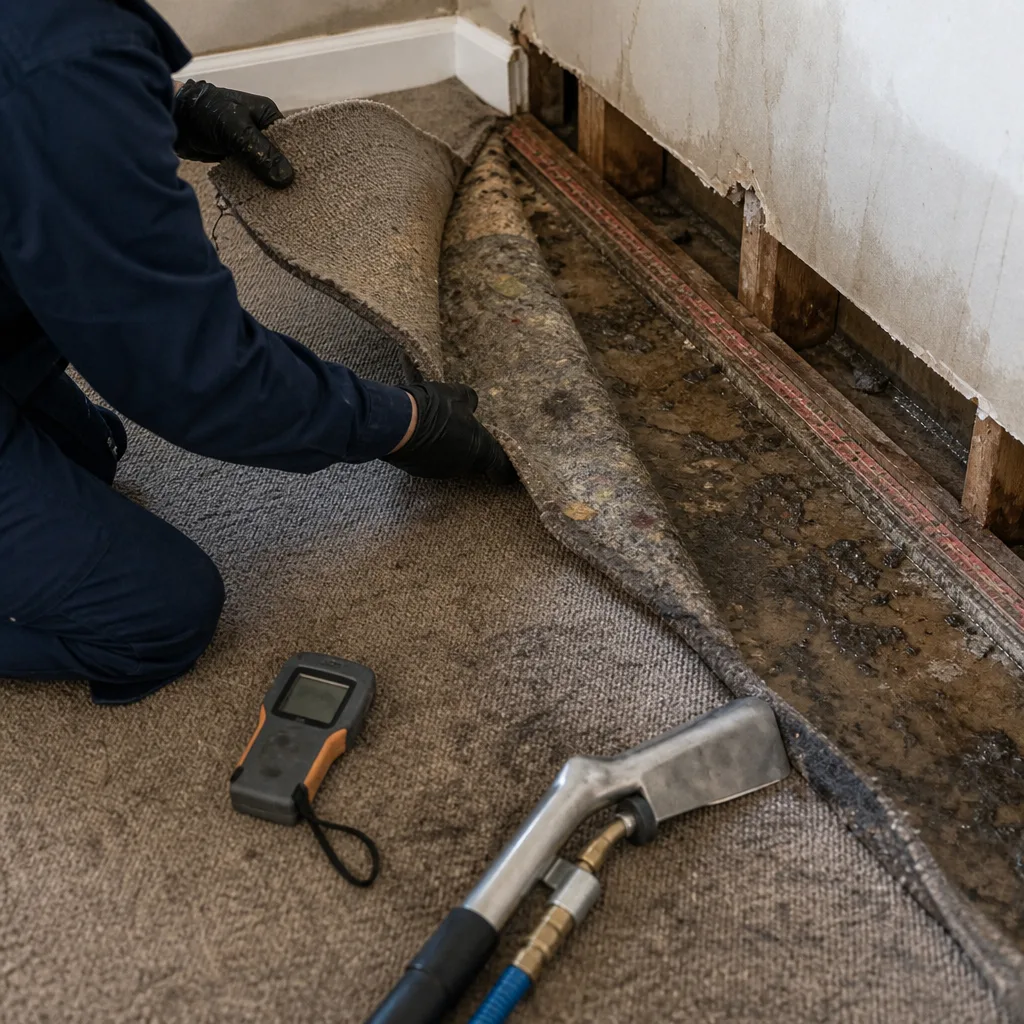
We document the full extent of the damage with thermal imaging and moisture meters. For a Park Ridge storefront near the Pascack Brook, that includes checking for prior repairs that may be hiding older contamination.
Extraction & Stabilization
Commercial extractors remove standing water fast. We board up openings, cut power where needed, and set containment so contaminated air doesn’t migrate into unaffected retail or office space.
Drying & Dehumidification
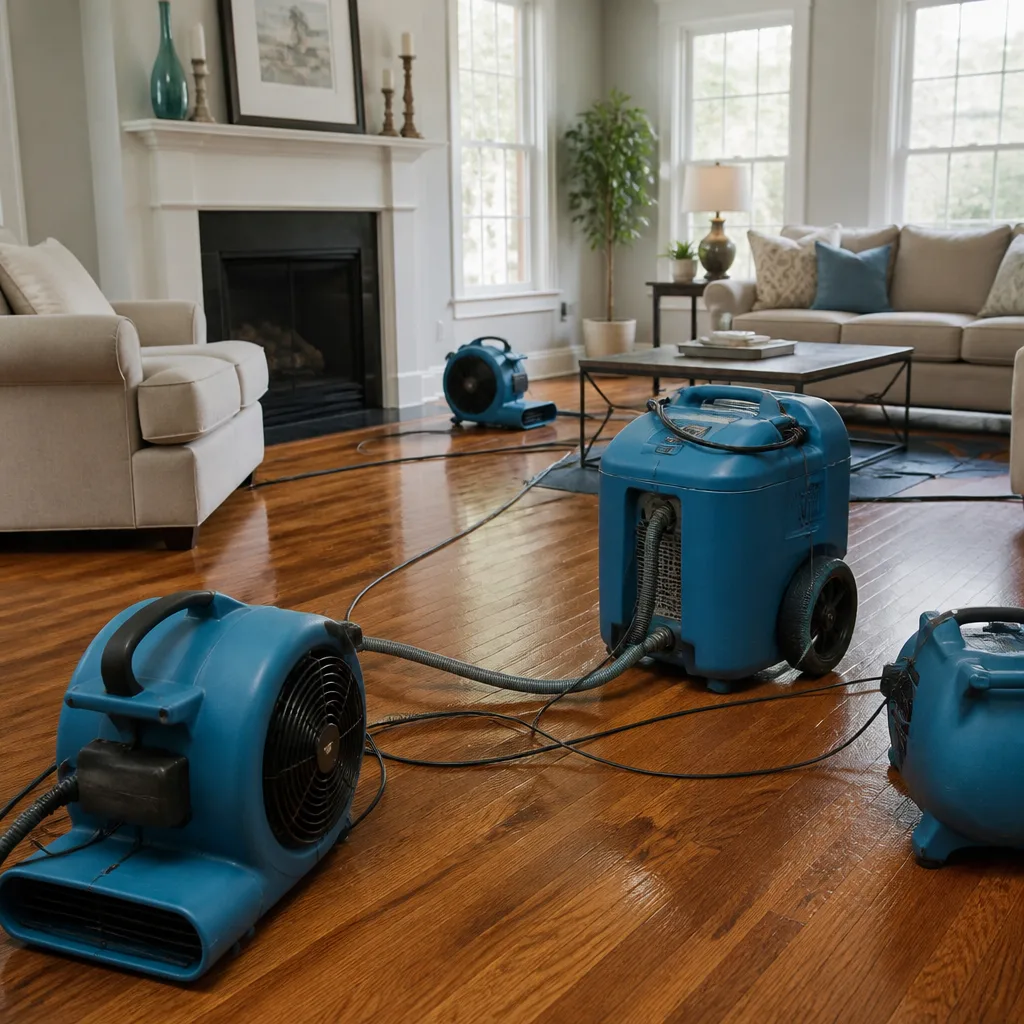
We place Dri-Eaz dehumidifiers and XPOWER air movers according to a moisture map, not guesswork. Daily readings are logged and shared with you and your adjuster until the dry standard is met.
Cleaning & Sanitization
HEPA air scrubbers pull particulate from the air while antimicrobials address bacterial contamination. For Category 3 losses, this step includes full removal of saturated porous materials.
Specialty Treatment for Commercial Spaces
Inventory and document recovery, electronics assessment, and content pack-out for retail and office environments. We treat what can be saved and document what cannot for your claim.
Repairs & Restoration
Our reconstruction crews replace drywall, flooring, and finishes. Because we’re a full-cycle Commercial Restoration company, the job ends with your space ready to reopen, not with a referral to someone else.
Need Emergency Commercial Restoration in Park Ridge Now?
Crews minutes away, answering live 24 hours a day. The sooner we start, the less it costs.
Working With Your Insurance Company
When your Park Ridge commercial property floods, the way the loss is documented in the first 48 hours determines how smoothly the claim goes. We photograph every affected area before, during, and after mitigation. We write line-item scopes in industry-standard format, which adjusters recognize and approve faster. And we talk to your carrier directly, so you’re not relaying messages between us and the desk adjuster. If the loss falls under a FEMA flood policy because your building sits in the Pascack Brook floodplain, we know how those claims work differently from standard commercial property policies, and we’ll walk you through it.
What We Provide Your Insurer
- Thorough documentation of the loss
- Photos of all damage, room by room
- Moisture readings and drying logs
- A detailed, line-item scope of work
- Direct coordination with your carrier
Built for Park Ridge’s Loss Calendar
Park Ridge has a predictable damage calendar, and we schedule around it. January and February bring deep freezes that burst supply lines in vacant commercial units and older buildings with original 1950s plumbing along Kinderkamack Road. The March and April nor’easters are the big one: multi-day rainfall saturates the Pascack Brook watershed faster than the channel can drain, and low-lying streets like Park Avenue and Pascack Road see Category 3 water in basements and ground floors. Summer thunderstorms cause flash flooding in parking lots and loading bays where drainage was designed for a different era. And fall’s leaf load clogs the same storm drains that spring’s runoff already stressed. Each season has a signature loss pattern, and knowing it means we arrive already oriented to what we’ll find.
Commercial Restoration Across Park Ridge’s Neighborhoods
The kind of damage we see along Kinderkamack Road, the borough’s main commercial corridor, depends on the building’s vintage. The older one- and two-story storefronts there sit tight to the road with shallow basements and original drain stacks that fail under freeze-thaw stress. Along Park Avenue, which runs parallel to the brook, businesses in converted 1950s and 1960s residential structures deal with finished basements flooded by overbank events. The commercial properties near the Park Ridge High School area and the borough’s municipal complex include larger flat-roof structures where ice dams and roof scuppers are the recurring culprit. And the industrial pockets near the Park Ridge border with Montvale have slab-on-grade buildings where water intrusion comes through loading bays and utility penetrations rather than basements. Each area needs a slightly different response, and the crew that treats them all the same is the crew that misses something.
Specialized Commercial Restoration Services We Offer in Park Ridge
Multi-Unit & HOA Restoration
Park Ridge has a mix of older garden apartments and small commercial condominiums, and a water loss in one unit rarely stays in one unit. We handle common-area restoration, unit-by-unit mitigation, and the documentation HOAs need to file a single coordinated claim. When a Pascack Brook overflow affects an entire building, our large-loss team takes over so the board isn’t juggling three contractors and an adjuster.
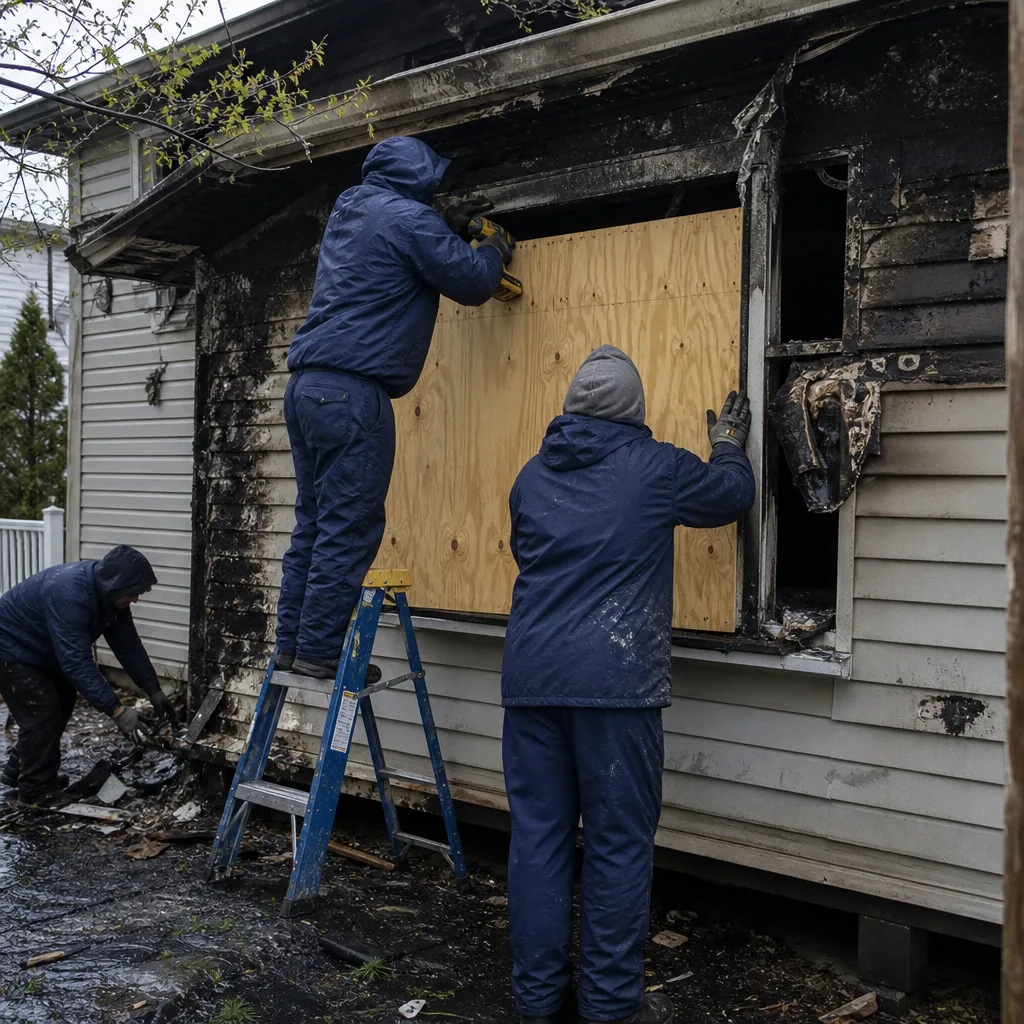
Large-Loss Response
When a nor’easter floods an entire Park Ridge commercial block or apartment complex, the response has to be scaled. We bring in additional drying capacity, multiple crew chiefs, and the project management to keep every affected unit moving in parallel. The 90-Day Done Right Promise applies to large-loss work exactly as it does to a single storefront: if it’s not done right, we make it right, in writing.
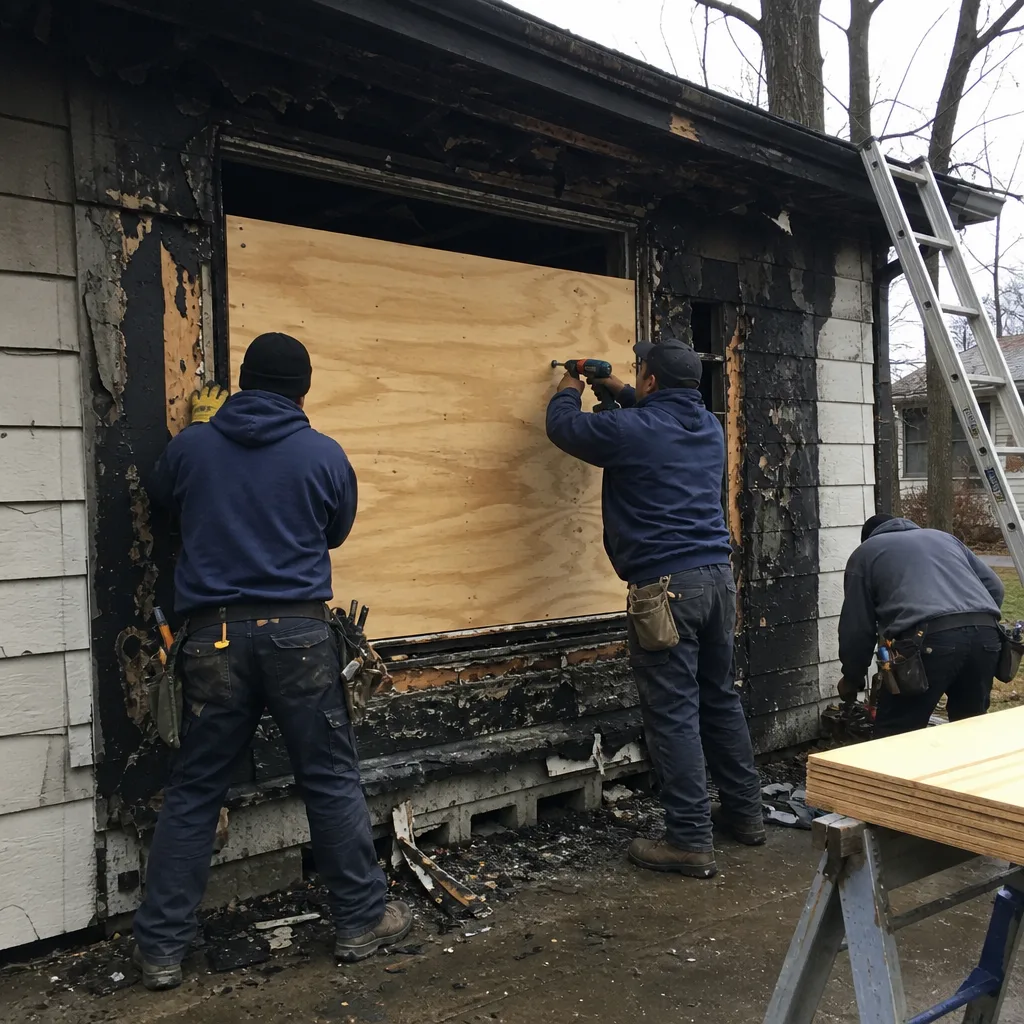
Business Interruption Minimization
Every day your Park Ridge storefront or office is closed costs real money. That’s why we prioritize getting your space to a safe, dry condition where you can reopen at least partially while reconstruction continues in the back. We’ll build a business interruption plan into your scope of work, sequencing the restoration around what your operation needs most. For retail tenants on Kinderkamack Road, that often means drying the sales floor first and containing the back room while work continues.
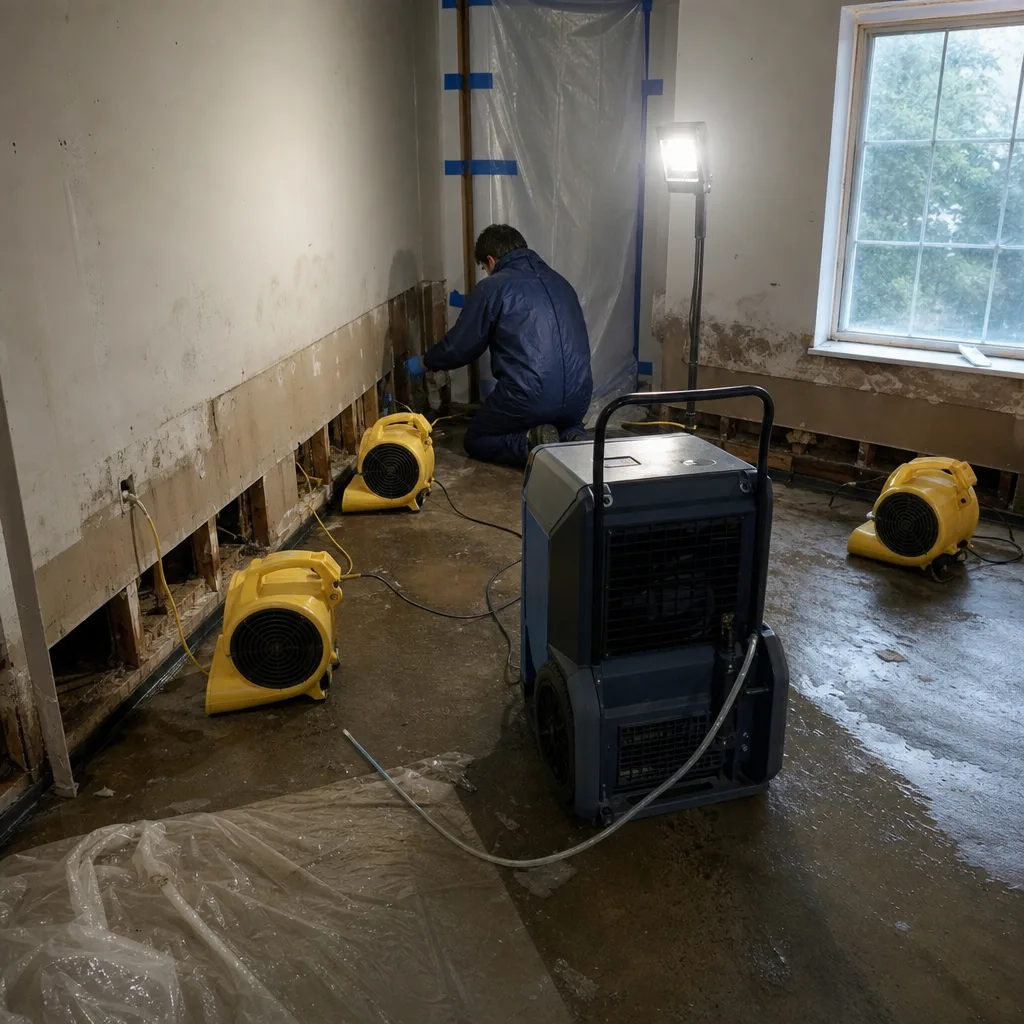
Office & Retail Restoration
Finished basement offices are common in Park Ridge’s converted commercial buildings, and they flood exactly like the residential basements they once were. We handle content pack-out, document drying, electronics assessment, and slab-level drying for these spaces. If your inventory got wet, we’ll separate salvageable stock from total loss and photograph everything for your claim.
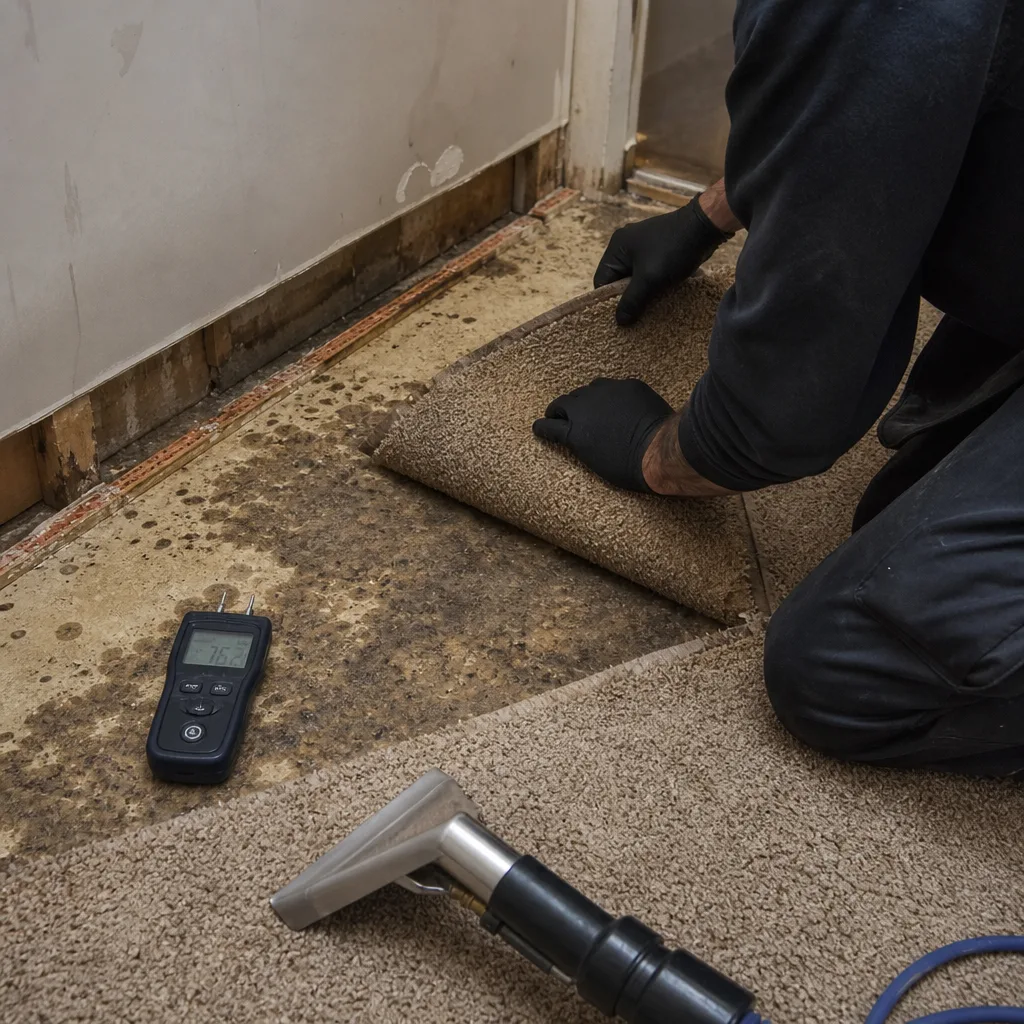
Industrial Facility Cleanup
The industrial and warehouse buildings near the western edge of Park Ridge have different needs: large open bays, high ceilings, and equipment that has to be isolated before drying can begin. We bring the same moisture-mapping discipline to a 20,000-square-foot warehouse that we bring to a 2,000-square-foot office, but with equipment sized for the air volume.
What happens when you call
- 1
A real person answersNo phone trees - you reach a local pro.
- 2
You get an upfront price rangeHonest numbers before anyone is dispatched.
- 3
A background-checked tech heads outLicensed & insured, dispatched right away.
- 4
You approve before work beginsNothing starts until you say go.
Commercial Restoration Costs in Park Ridge, NJ
Commercial restoration pricing in Park Ridge runs on square footage, water category, and how quickly the loss got attention. A small Category 1 cleanup in a 1,000-square-foot office typically runs $3,500 to $7,000. A Category 2 loss with carpet and drywall replacement in a storefront usually lands between $8,000 and $18,000. A Pascack Brook flood that brings Category 3 water into a finished basement commercial space, with full gut, sanitization, and rebuild, will commonly run $25,000 to $60,000 or more depending on finishes and the extent of prior-repair demolition. What moves the price most is whether the water sat overnight, whether the building has original 1960s materials that need more tear-out, and whether hidden mold from a previous restoration is present. The free visual inspection gives you a firm scope and a number before any work starts, so there’s no surprise on the bill.
We Also Serve Cities Near Park Ridge
Our crews handle commercial restoration throughout northeastern Bergen County, including Montvale, Woodcliff Lake, Hillsdale, and Saddle River. If your business is anywhere in the Pascack Valley or the surrounding corridor, Park Ridge is home territory for our dispatch routes.
Park Ridge Commercial Restoration Questions, Answered
How does the Pascack Brook’s floodplain affect a commercial restoration project in Park Ridge?
If your building is in a FEMA-designated Special Flood Hazard Area along the brook, the restoration itself may trigger substantial-damage review, which can require elevation of mechanical systems or other modifications before the repair can be completed. We’ve handled enough of these in Park Ridge to know how to sequence the restoration work so a flood claim doesn’t stall your reopening.
What’s different about restoring a 1960s Park Ridge commercial building with a finished basement after a flood?
These buildings often have original waterproofing that was never designed for Pascack Brook overbank conditions, plus finished basement spaces that hold drywall, flooring, and inventory. Worse, many have been restored before, and a prior crew may have left hidden mold or a substandard vapor barrier that has to be removed before the current damage can be properly assessed and dried.
Can you handle business interruption for a Park Ridge storefront hit by a nor’easter flood?
Yes. We sequence the restoration so the customer-facing areas dry and reopen first, while contained reconstruction continues in less critical zones. We’ll also document the interruption for your claim so you can pursue lost-income coverage. Call (914) 935-7914 and we’ll put a plan together with you.
What water category do most Pascack Brook overflows produce in commercial basements?
Category 3. The brook carries storm runoff, road chemicals, and whatever has washed into the watershed, so the water in your basement is considered grossly contaminated. That means full containment, demolition of porous materials, and antimicrobial treatment before drying can even begin. Anything less is a liability.
Do you handle multi-unit commercial buildings in Park Ridge that flood repeatedly?
We do, and we approach a repeat-flood building differently. The first thing we ask is what was done last time. If a previous restoration left hidden moisture or mold behind, we’ll tear out that work before writing a new scope. Our goal is to end the cycle, not add another layer on top of it.
How fast can you actually get to a Park Ridge commercial property?
Our commitment is 45 minutes from your call to a crew on site. Park Ridge is inside our core dispatch area, so during a nor’easter emergency we’ll have teams moving through the borough continuously. Call (914) 935-7914 and a live dispatcher will tell you your ETA.
Will my commercial insurance cover the restoration work?
Most commercial property policies cover water damage from burst pipes and storm intrusion, subject to your deductible and exclusions. Flood damage from the Pascack Brook requires a separate FEMA flood policy if your building sits in a designated Special Flood Hazard Area. We’ll document everything from the first hour and bill your carrier directly either way.
What should I do in the first 30 minutes after discovering damage in my Park Ridge business?
Shut off the water source if you can do so safely, cut power to the affected area if water is present, move inventory and documents to dry ground if it’s safe, and call (914) 935-7914. Don’t wait until morning. The first hour of extraction is what saves your drywall, your floors, and your inventory.
Serving Park Ridge, NJ - Our Local Coverage Area
We’re based in the Park Ridge area and know this community well. Use the map below to see our service coverage - if you’re nearby, we can almost certainly help.
Why the Pascack Brook Changes Everything
Most commercial restoration companies treat a flooded building the same way whether it’s in Park Ridge, Montvale, or Woodcliff Lake. That’s the mistake. Because the Pascack Brook runs directly through Park Ridge, many commercial properties along its low-lying streets sit in FEMA-designated Special Flood Hazard Areas. That means even a small restoration job here can trigger flood insurance claims and substantial-damage thresholds that would never apply to a strip mall two towns over. We’ve had jobs where the water in the basement was only a few inches deep, but the claim process and the restoration sequence had to be organized around FEMA requirements from day one. If your restoration contractor doesn’t understand that difference, you’ll find out the hard way when the permit gets held up and your business stays closed. After a March nor’easter pushed the brook over its banks, our crew was called to a 1960s-era retail building on Park Avenue where the finished basement office space had taken on two feet of Category 3 water. We set up containment and structural drying with Dri-Eaz dehumidifiers and XPOWER air movers, and during moisture mapping our techs found old mold behind a previously restored drywall patch, so we tore out the prior repair before even writing the scope of work for the current loss. That’s the difference between a crew that knows Park Ridge and one that just showed up.
Floodline Restoration Co. brings 42 years of restoration experience to every job in Park Ridge, with background-checked, IICRC-certified technicians and a 90-Day Done Right Promise in writing. If you own or manage a commercial property in Park Ridge and you’re looking at water in the basement or smoke in the walls, call (914) 935-7914 now. A live person will answer. A crew will be on the way. And the job will be done right, from the first extraction to the final coat of paint, by the same team standing behind it.
Written by Curt Bowman, Owner at Floodline Restoration Co., serving Park Ridge and Bergen County since 2010.