

Free visual inspection and a written scope of work before any mitigation begins - photos, moisture readings, and drying logs go in your claim file
The scope we write is the scope we bill. Anything new gets shown to you, in writing, before we touch it.
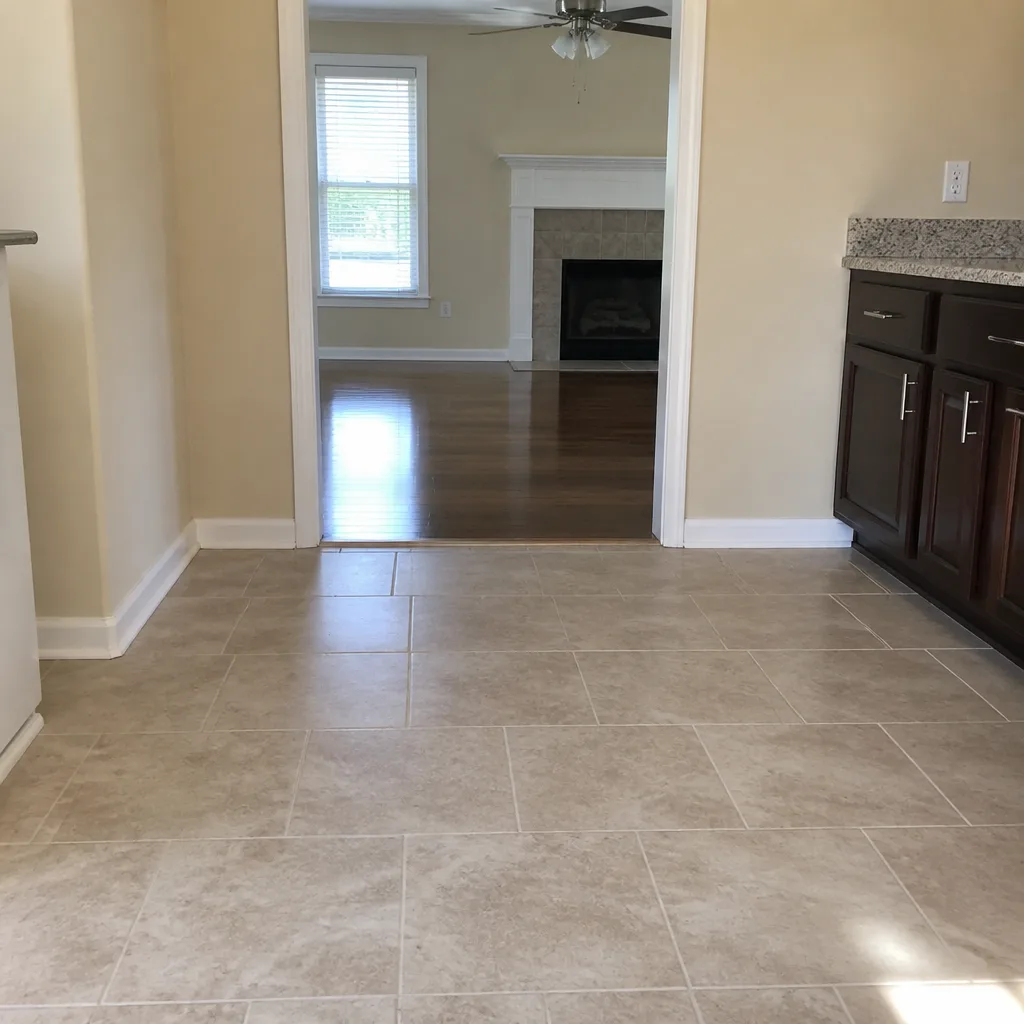
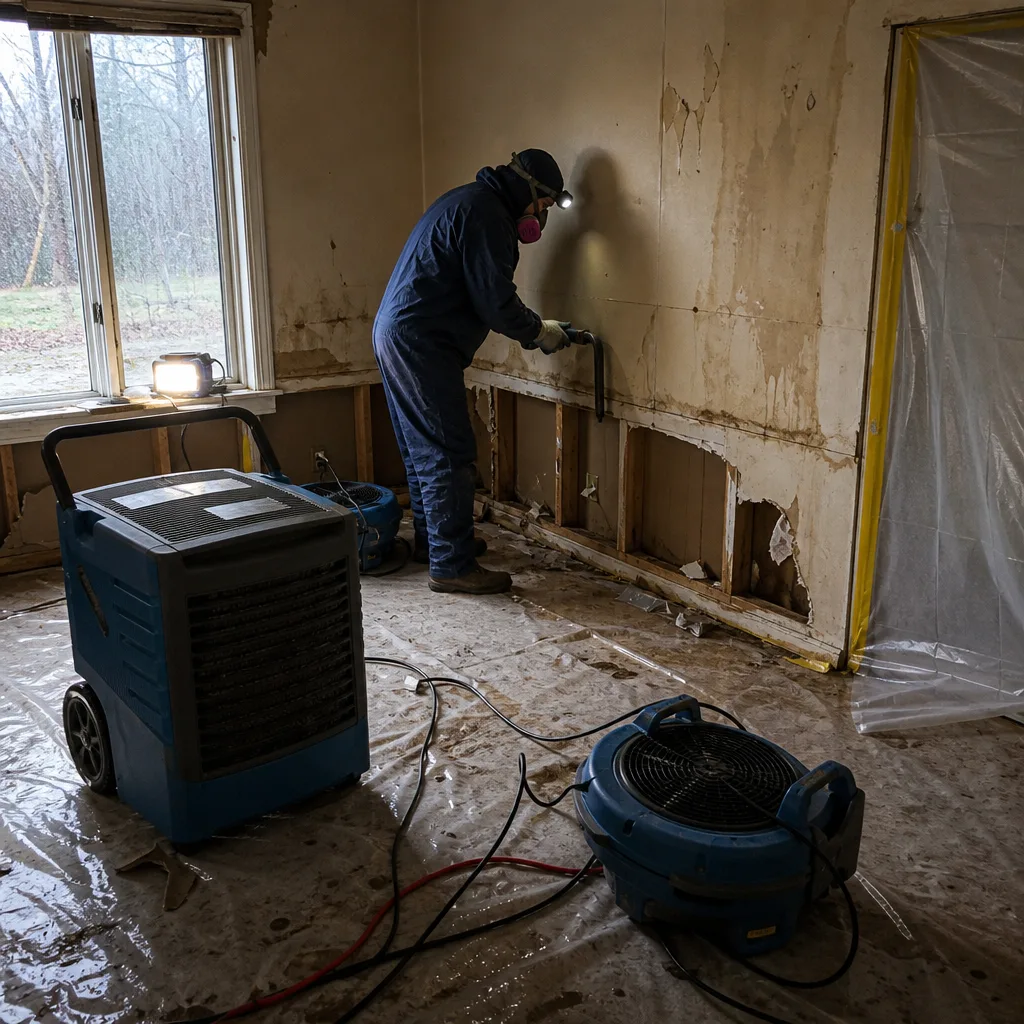 Before
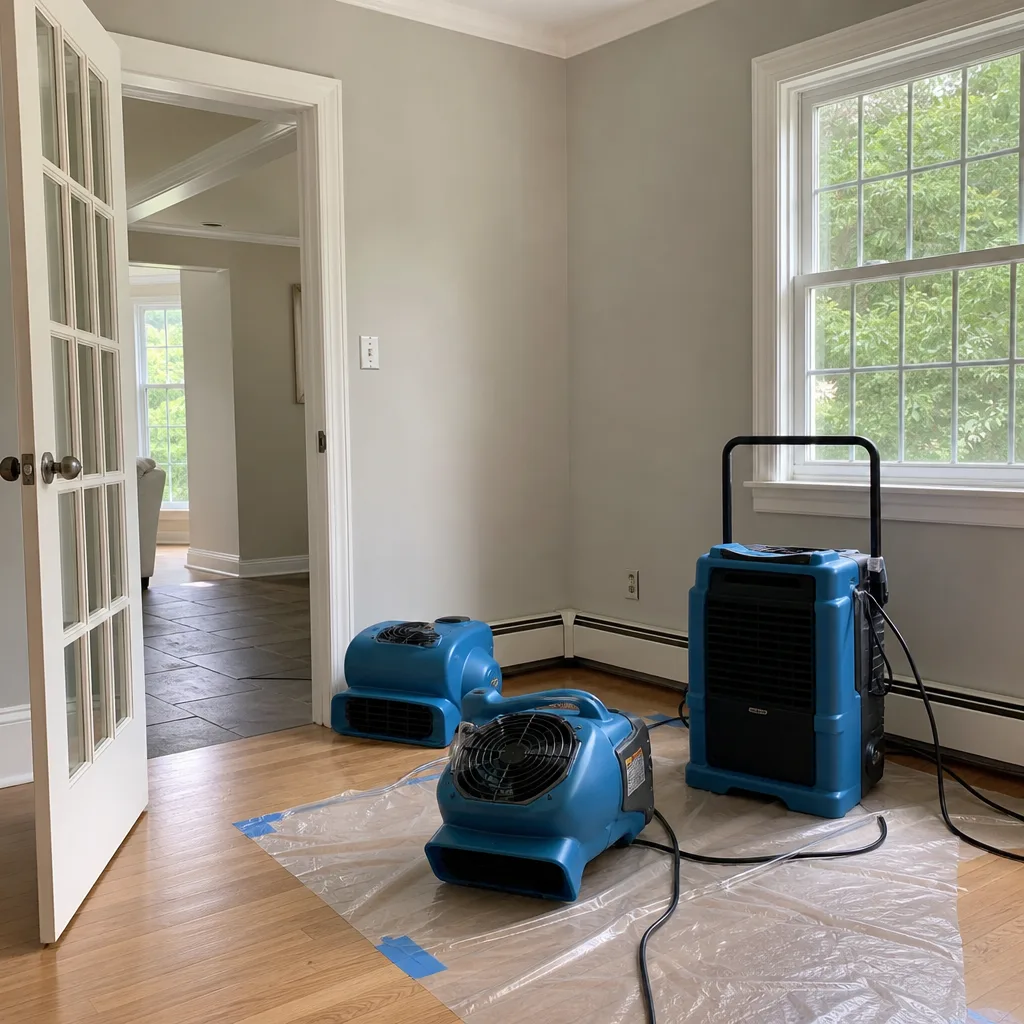 After
After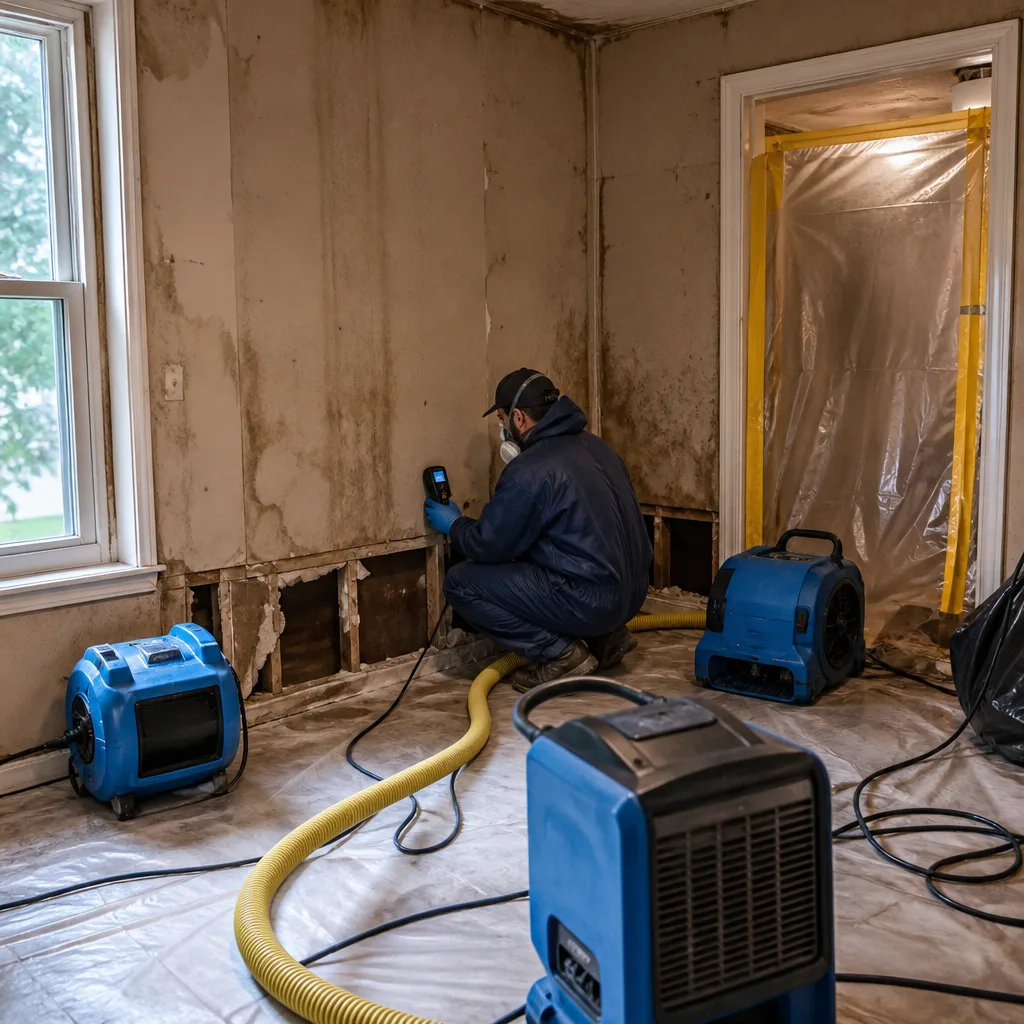 Before
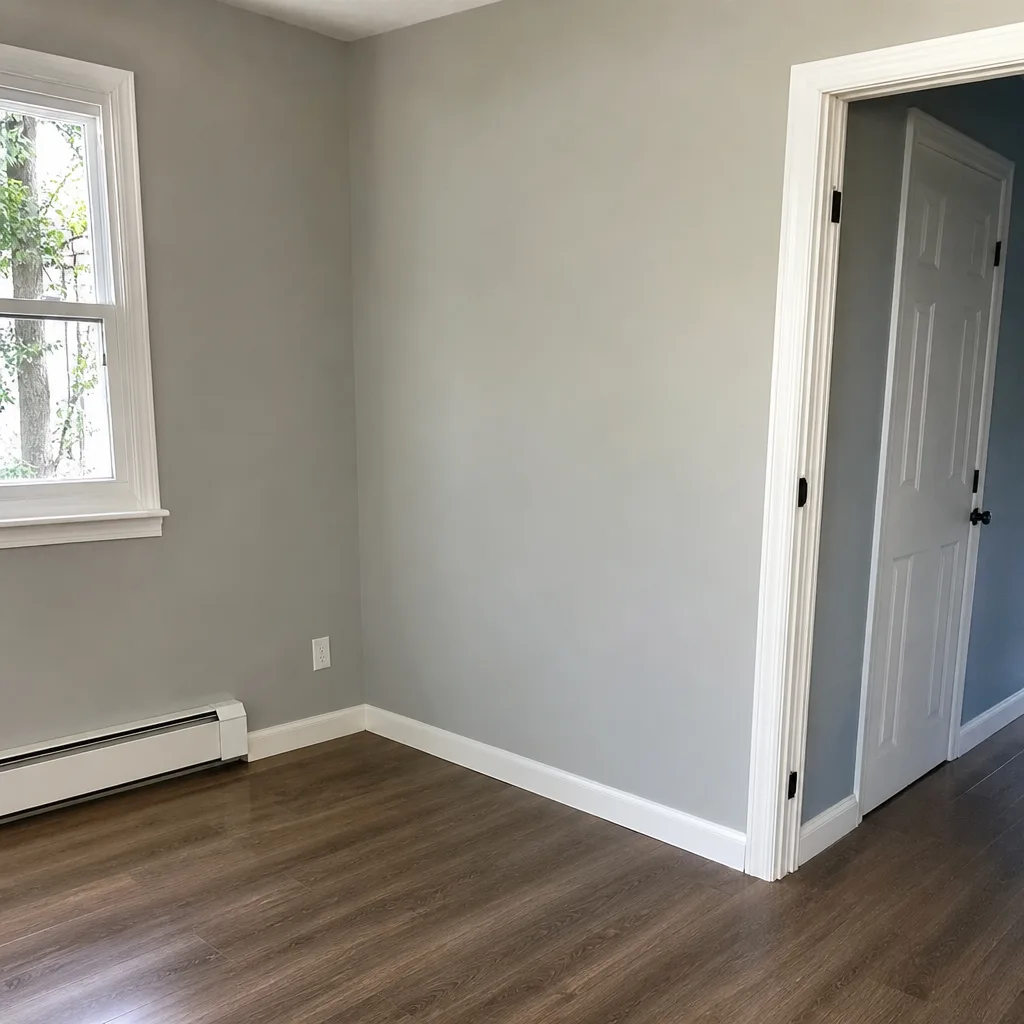 After
After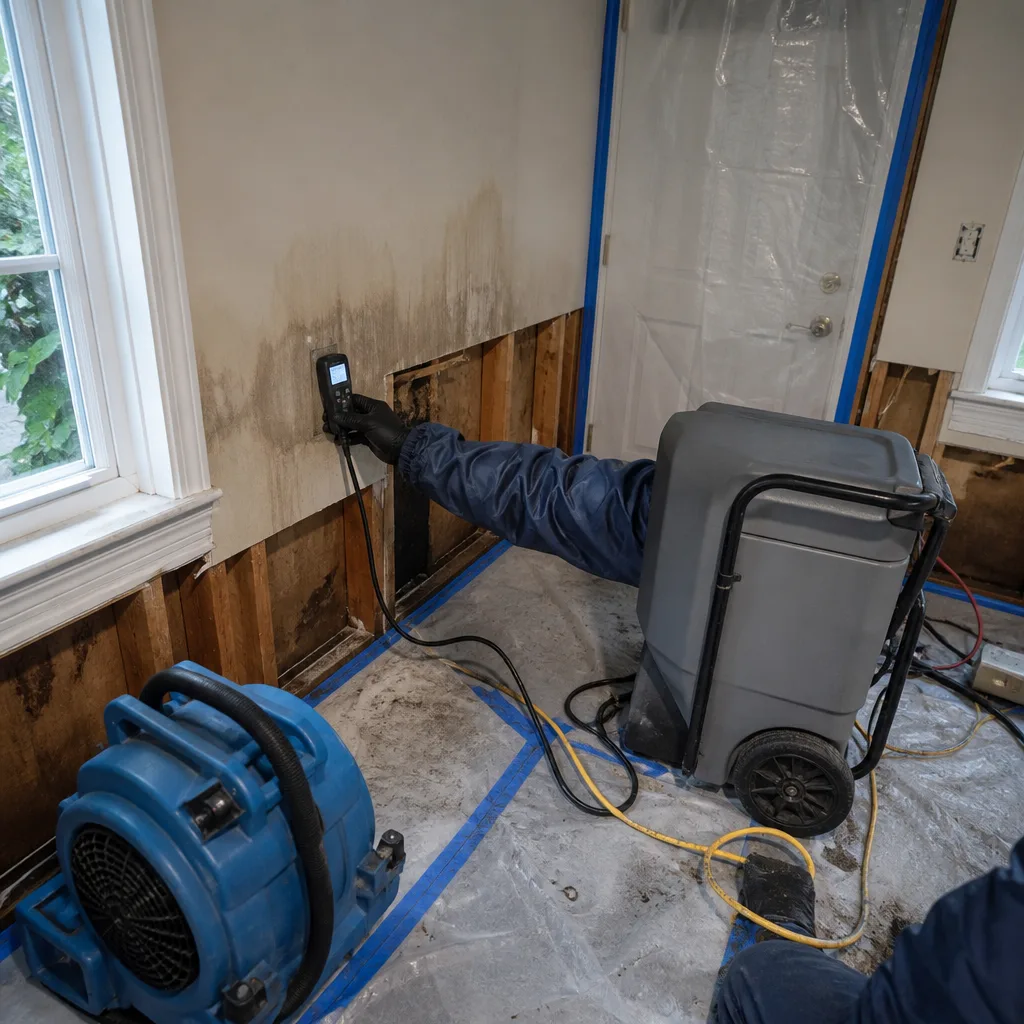 Before
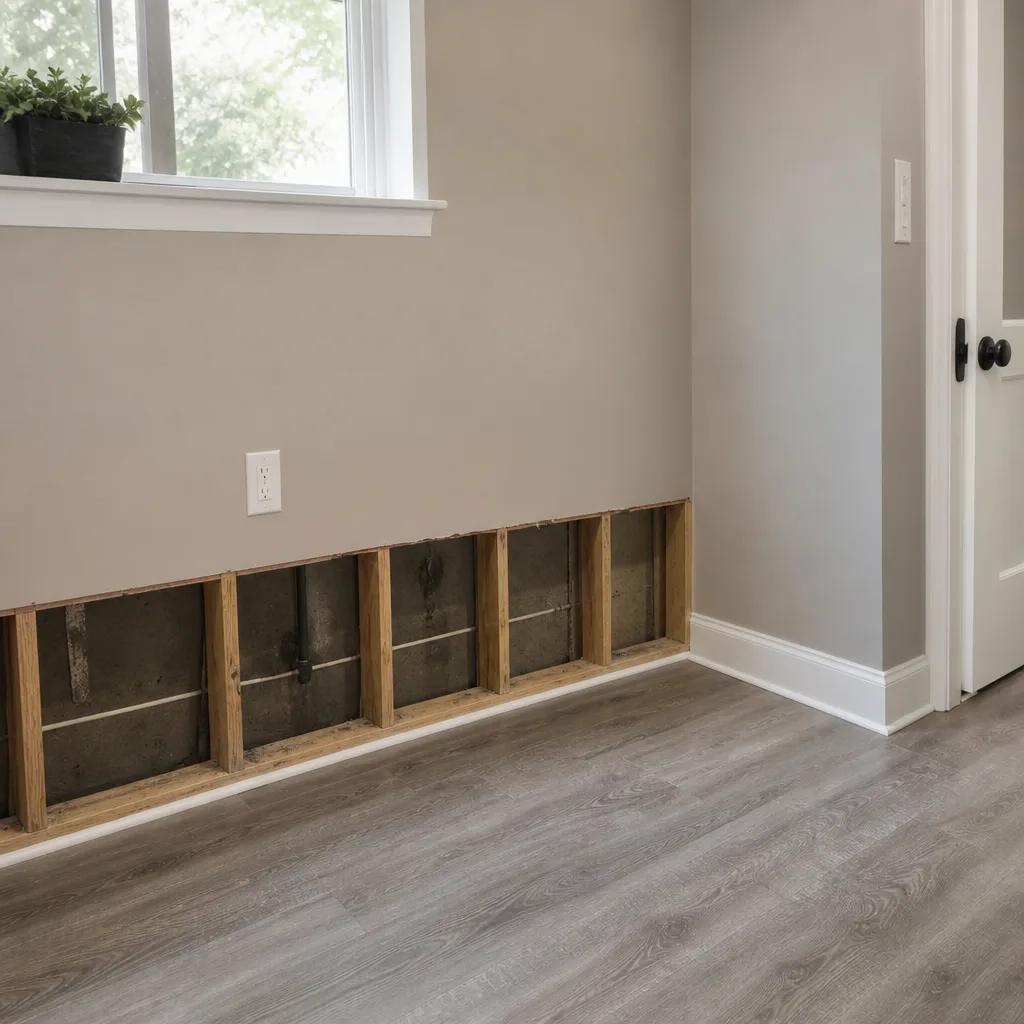 After
After24/7 Emergency Mold Remediation in Harrington Park
Mold remediation in Harrington Park typically costs $1,400-$4,800 depending on how far the growth has spread behind walls and under flooring, and most jobs are started within 48 hours of the first call. If you can smell must or see staining on a basement wall after a storm, call (914) 935-7914 right now. A live dispatcher answers around the clock, and our crews reach Harrington Park homes quickly because we know every route through the borough, from Harriot Avenue to the neighborhoods off Lafayette Road.
The first hour matters. Mold that feeds on wet drywall and insulation spreads outward, and in Harrington Park’s full-basement colonials, what starts as a small patch behind a finished wall is usually far larger once the drywall comes down. We offer a free visual inspection in Harrington Park, and we arrive with thermal imaging and moisture meters, not a sales pitch. A written scope comes before any work begins. That is the Floodline Restoration Co. way: a square deal, never a guessing game.
Understanding Mold Remediation Severity in Harrington Park Properties
Mold remediation severity is driven by three variables: how much moisture is present, what type of water caused it, and how long it has been sitting. Harrington Park’s 1950s-1970s colonials, split-levels, and Cape Cods have full basements sitting against expansive clay soils that hold groundwater for days after a nor’easter or a February thaw. When that groundwater pushes through aged mortar joints in concrete-block walls, it wicks into wall cavities. The block face looks dry. The cavity behind it is not. That is Category 2 or 3 water, the kind that feeds serious mold growth behind finished drywall.
Containment is the first decision. For isolated mold in a single closet or crawl space, a HEPA-filtered negative-air setup and localized removal may be enough. For mold that has traveled through a finished basement wall cavity or climbed up into rim joists, full containment with poly sheeting, air scrubbing, and post-remediation clearance testing is the only defensible approach. Pre-1980 Harrington Park homes with original foundation parging and no interior drainage systems are the most prone to the repeat-seepage pattern that makes mold an ongoing problem rather than a one-time event.
Why Harrington Park Property Owners Choose Floodline Restoration Co.
- 45-minute response commitment. From the moment you call (914) 935-7914, a live dispatcher starts routing a crew to Harrington Park. We do not put you in a queue.
- 24/7 live answer, always a person. Not an automated system, not a callback service. At 2 a.m. on a Sunday, a real human picks up the phone.
- IICRC-certified crews, trained to RIA and IFA standards. Background-checked and uniformed. They carry WRT, AMRT, and FSRT credentials, and they follow the protocol, not shortcuts.
- Free visual inspection. We assess the visible mold, scan with moisture meters and thermal imaging, and give you a written scope before any drying or removal begins.
- Direct insurance billing. Our office communicates with your carrier, sends the documentation, and handles the paperwork. You are not the messenger.
- One team, start to finish. The same Floodline Restoration Co. crew that contains and remediates the mold also handles drying, antimicrobial treatment, and rebuilding. No mid-job handoff to a stranger.
Our Mold Remediation Process
Inspection & Assessment
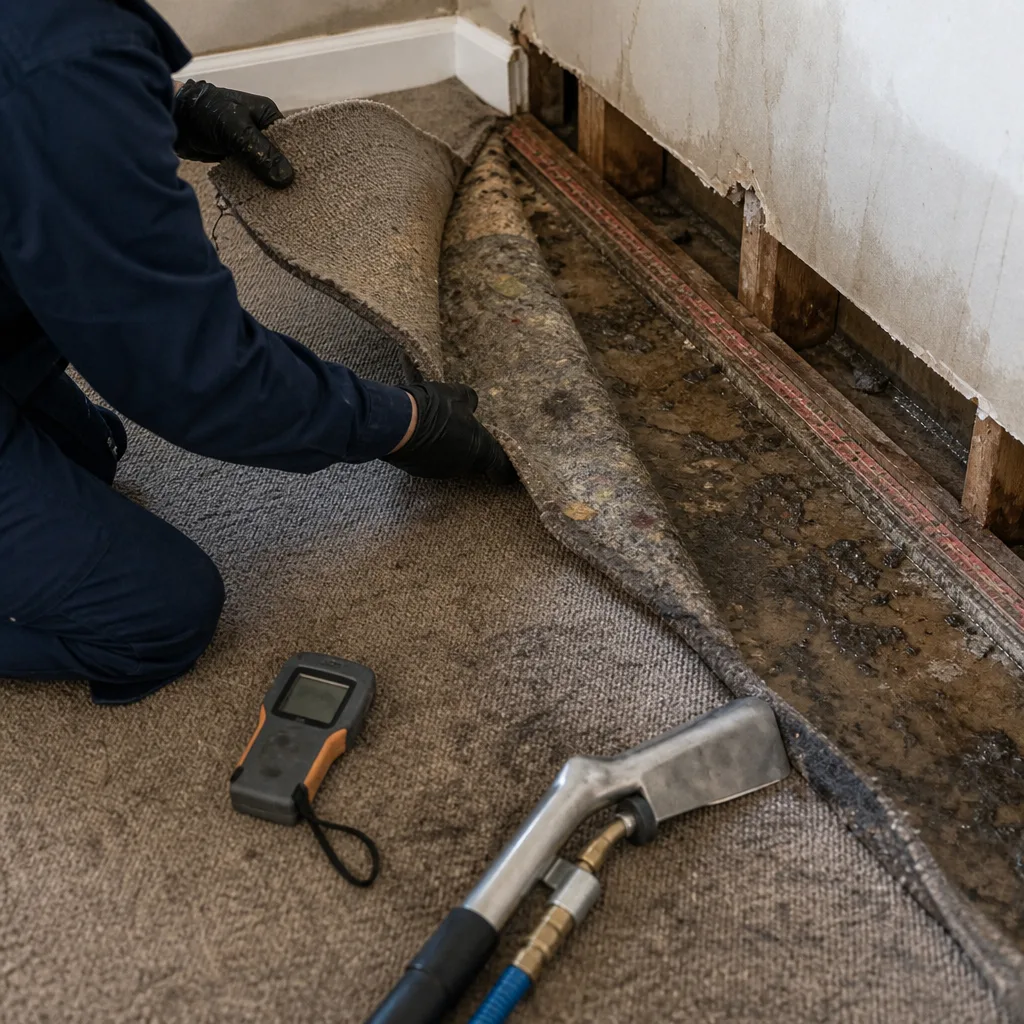
We start with thermal imaging and moisture mapping to find every damp cavity, not just the visible staining. In Harrington Park basements, this often means scanning finished walls where the block face looks dry but the framing behind it holds readings above 20%. We photograph everything and write a scope before touching a single panel.
Containment & Air Control
We seal the affected area with poly sheeting and set up HEPA-filtered negative-air machines so mold spores cannot migrate into the rest of the house while we work. Air scrubbers run continuously through removal.
Removal & Drying
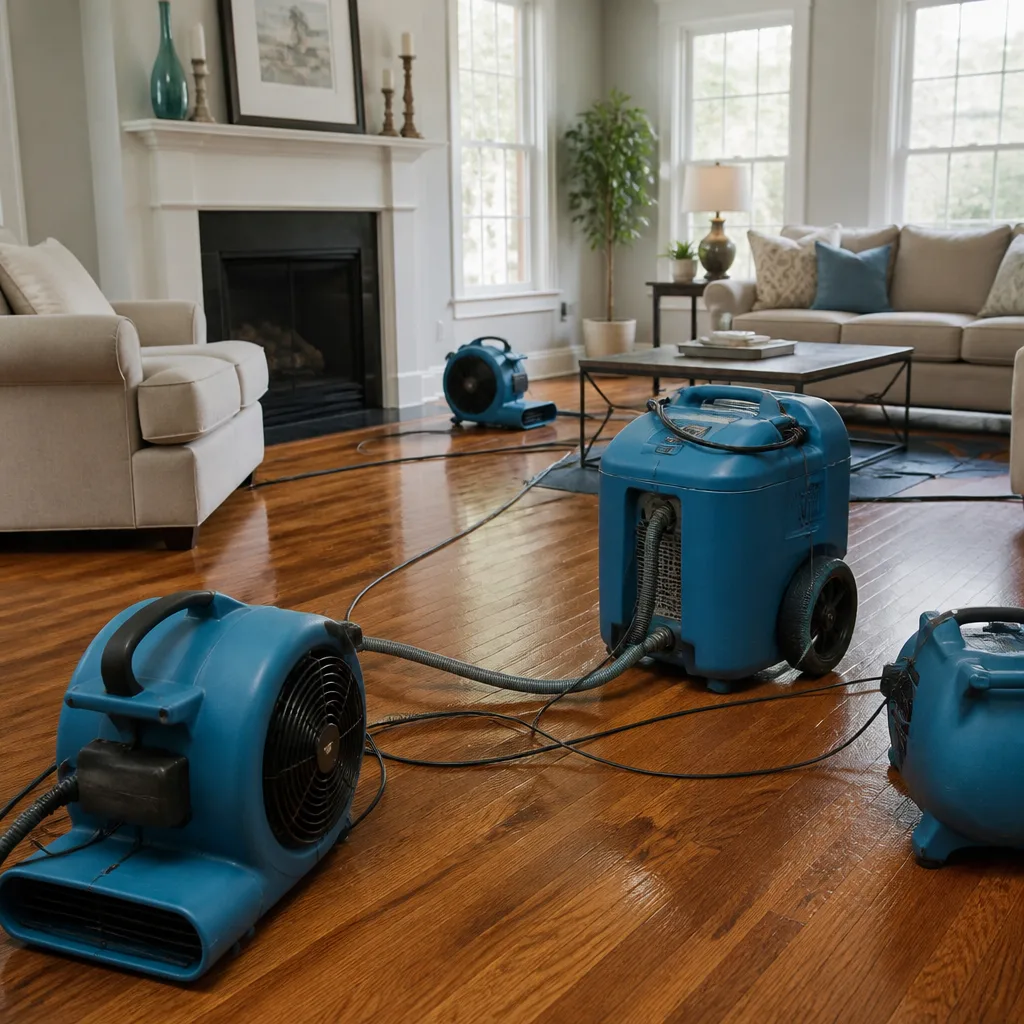
Wet drywall, insulation, and damaged materials come out in sealed bags. Then we place professional Dri-Eaz and Phoenix dehumidifiers and high-volume air movers on a moisture-mapped drying plan, with daily readings logged until the structure reaches dry standard.
Cleaning & Antimicrobial Treatment
All remaining surfaces get HEPA vacuuming and antimicrobial treatment. We treat rim joists, floor plates, and any framing that stays in place. This is where most DIY attempts fail: bleach does not reach the mycelium inside the wood fibers.
Crawl Space & Moisture Control
For Harrington Park homes with crawl spaces, we address the source: standing water, dirt-floor vapor pressure, and poor drainage. Treatment may include vapor barriers, dehumidification, or drainage correction so mold does not return next season.
Repairs & Restoration
Once the structure is dry and clearance testing confirms the air is clean, our crew rebuilds what we removed. Drywall, insulation, trim, paint. The same team, the same standards. Done right and backed in writing.
Need Emergency Mold Remediation in Harrington Park Now?
Crews minutes away, answering live 24 hours a day. The sooner we start, the less it costs.
Working With Your Insurance Company
Mold claims in Harrington Park require two things from day one: documented moisture readings and a clear line between water damage and mold growth. Most homeowner policies cover mold remediation when it results from a covered water event, like a burst supply line or storm-related seepage, but not when the moisture was a long-standing maintenance issue. We have handled enough Bergen County claims to know how carriers read the difference. Our crews document from the first hour: photos of every affected area, moisture logs, and the exact drying standard we hit. We coordinate with your adjuster directly, send them the line-item scope, and bill the carrier. You focus on getting your house back.
What We Provide Your Insurer
- Thorough documentation of the loss
- Photos of all damage, room by room
- Moisture readings and drying logs
- A detailed, line-item scope of work
- Direct coordination with your carrier
Built for Harrington Park’s Loss Calendar
Harrington Park sees mold-related work on a seasonal rhythm, and it is predictable. Late winter is the busiest: freeze-thaw cycles from December through March stress older supply lines and attic insulation, and February snowmelt re-saturates the clay around foundations. That is when we get the calls about water seeping through block walls that have been holding groundwater for a week. Spring brings heavy nor’easter rains and the first big reveal: homeowners opening their basements after winter find mold behind paneling and drywall that never fully dried. Summer thunderstorms dump sudden rain the local drainage cannot shed fast enough, and humid July air keeps finished basements damp without a dehumidifier. Fall is the quiet window, but it is also the smart time for a free mold inspection before winter pushes water back against the foundation. Harrington Park’s inland position means cold air settles in low spots, so burst-pipe calls cluster in January and February. We plan crews accordingly, and we answer the phone when it rings at 5 a.m. on a frozen Tuesday.
Mold Remediation Across Harrington Park’s Neighborhoods
Harrington Park is a small borough, less than two square miles, but the housing stock changes block by block. The streets off Harriot Avenue and Lafayette Road hold the borough’s older inventory: 1950s and early 1960s colonials with original poured-concrete foundations. Those basements are where we most often find the wicking pattern, moisture moving through aged mortar joints behind finished walls. Over by Highland Avenue and the neighborhoods near the Pascack Brook, split-levels from the 1970s sit on slightly better-drained ground, but their crawl spaces trap humidity through the summer. The homes near the Little League fields and the west end of town toward the Reservoir are a mix of Cape Cods and expanded ranches, many with finished basements added in the 1980s or later. Those finished basements are the risk: the original drainage was never upgraded, and drywall hides what the foundation is doing. We route crews up Blanche Avenue, along Elm Street, and across the side streets off Tappan Road daily. In a borough this compact, we can be at any door in Harrington Park within minutes of dispatch.
On a split-level off Elm Street, our techs found a 1962 block foundation where mortar joints had opened just enough to wick moisture behind drywall for years. The block face looked dry. Moisture mapping showed 34% readings in the cavities. We contained the basement, set up Dri-Eaz air movers and Phoenix dehumidification, removed the wet drywall, performed antimicrobial treatment, and dried the structure to pre-loss condition over six days. What arrived as a small seepage call became a documented mold remediation with drying logs and clearance testing.
Specialized Mold Remediation Services We Offer in Harrington Park
Mold Inspection & Testing
A Harrington Park mold inspection is not a visual once-over. We use moisture meters and thermal imaging to find dampness inside wall and ceiling cavities, then collect air and surface samples where needed. Homeowners about to finish a basement should get this done first. The borough’s older foundations wick moisture in ways that are invisible until the drywall is up and the mold has a closed space to grow in.
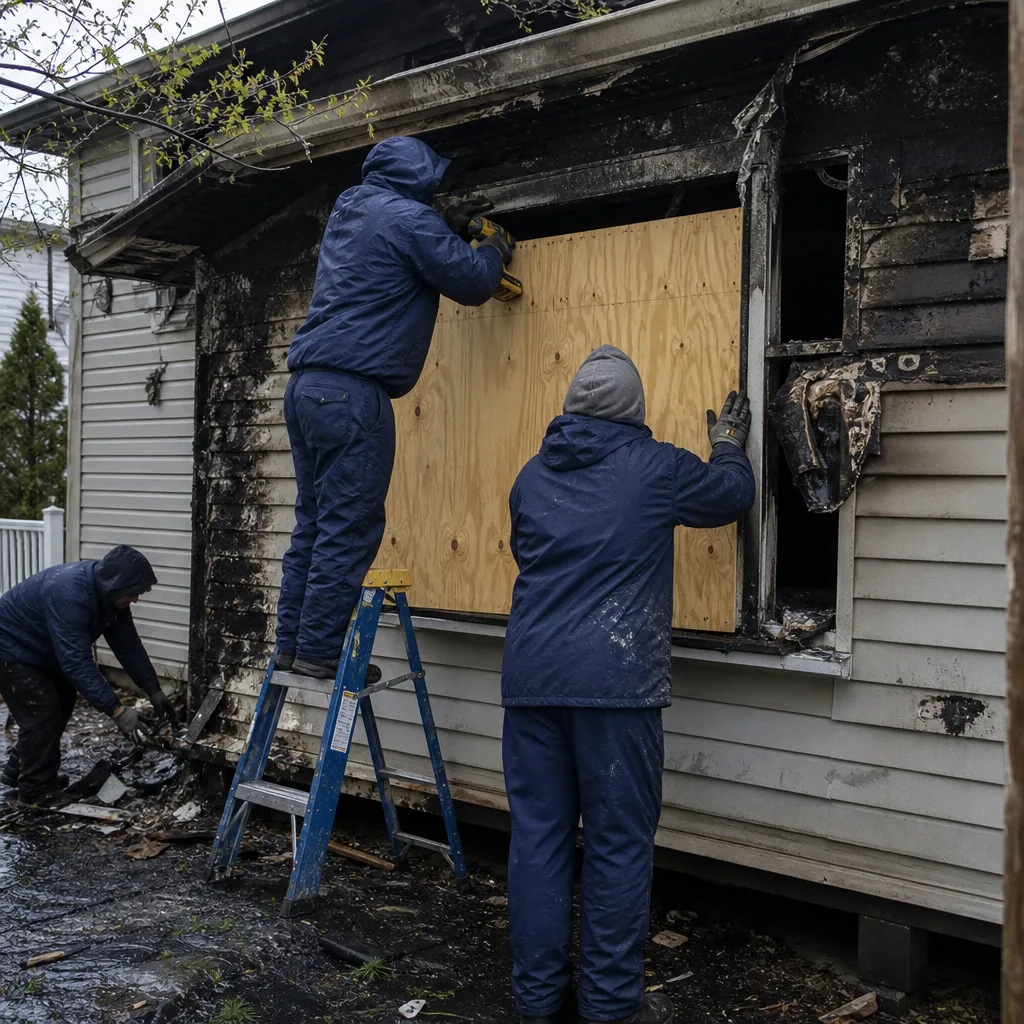
Mold Removal
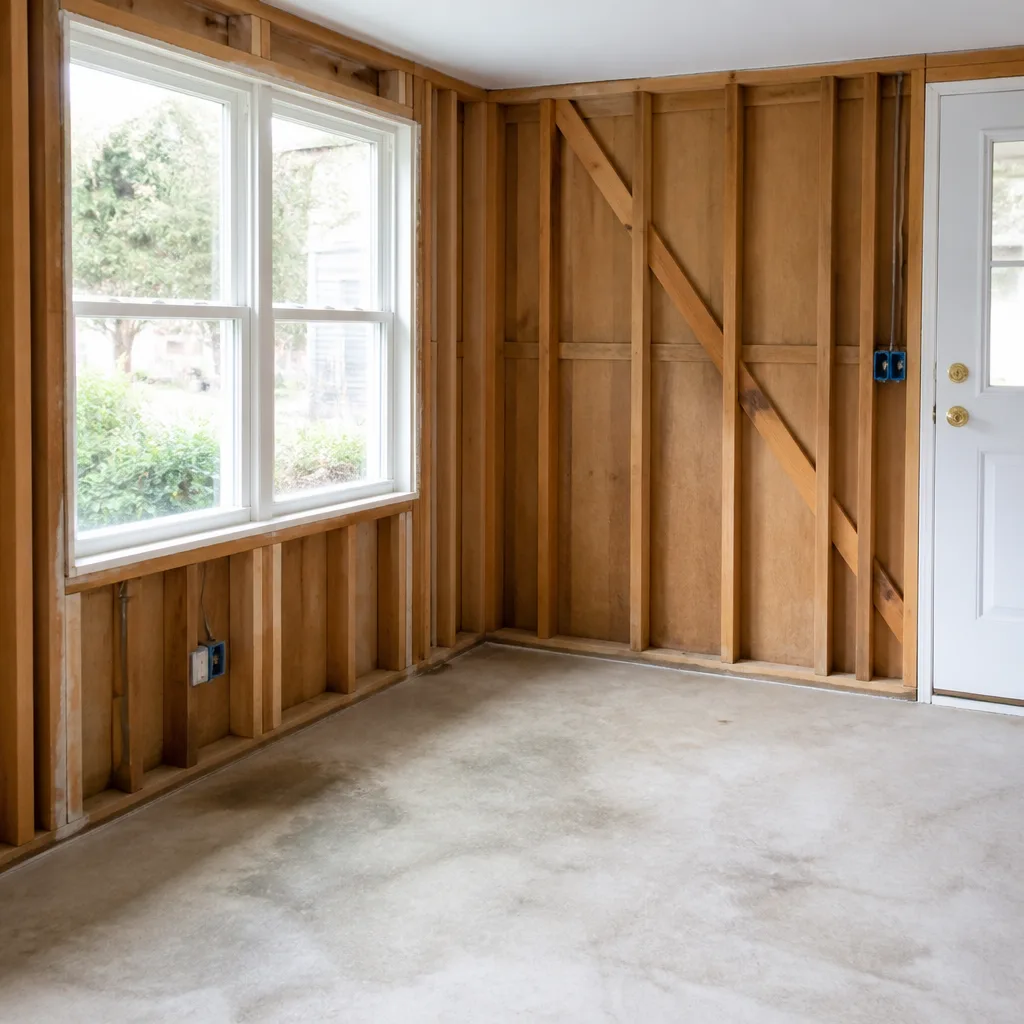
Removal is the mechanical part: cutting out affected drywall, bagging contaminated insulation, HEPA-vacuuming framing, and disposing per IICRC protocol. In Harrington Park basements, removal often reveals more than expected because finished walls conceal long-term moisture. We budget the scope for that reality and document what we find as we open the wall.
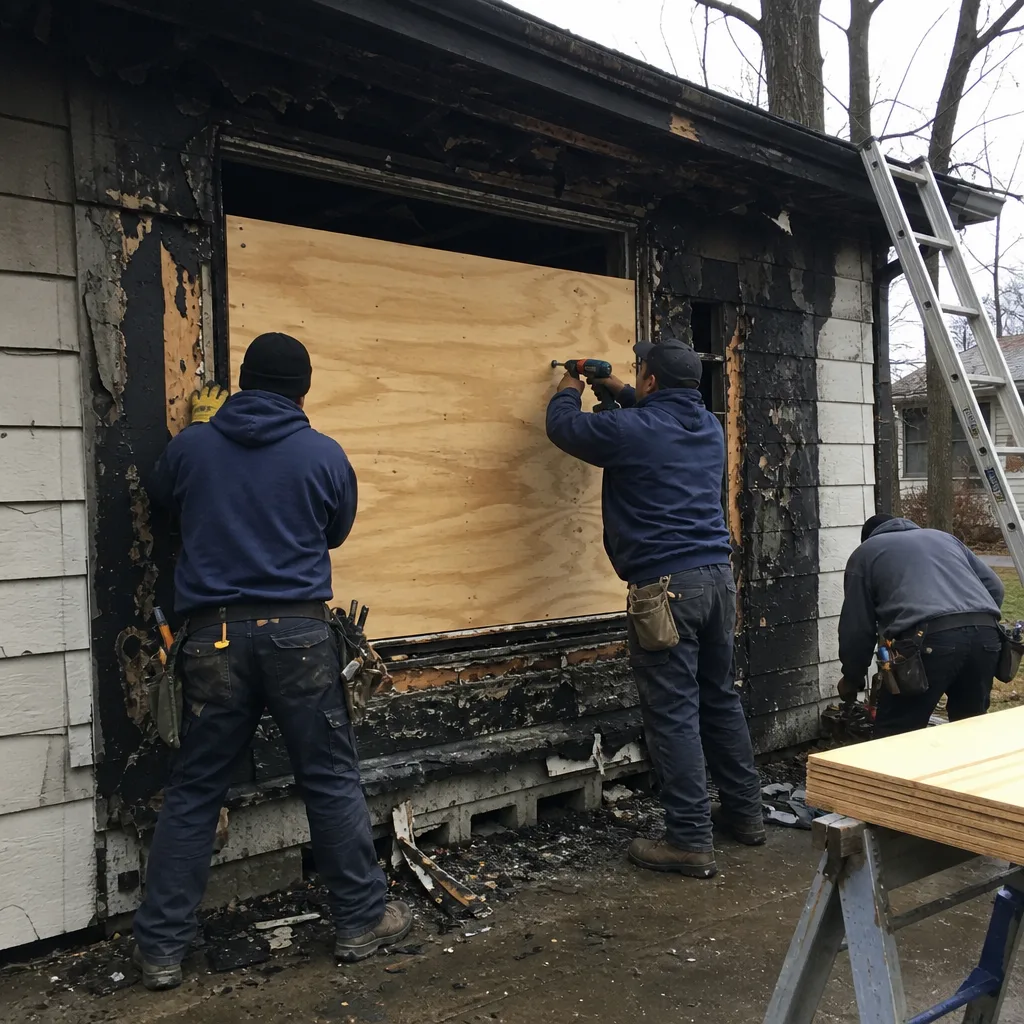
Black Mold Remediation
The term black mold usually refers to Stachybotrys chartarum, a slow-growing mold that likes continuously wet cellulose. Harrington Park basements with chronic seepage and drywall in contact with damp floors create exactly the right conditions. Our black mold remediation work includes full containment, advanced antimicrobial treatment, and post-remediation clearance testing, not just wiping visible staining.
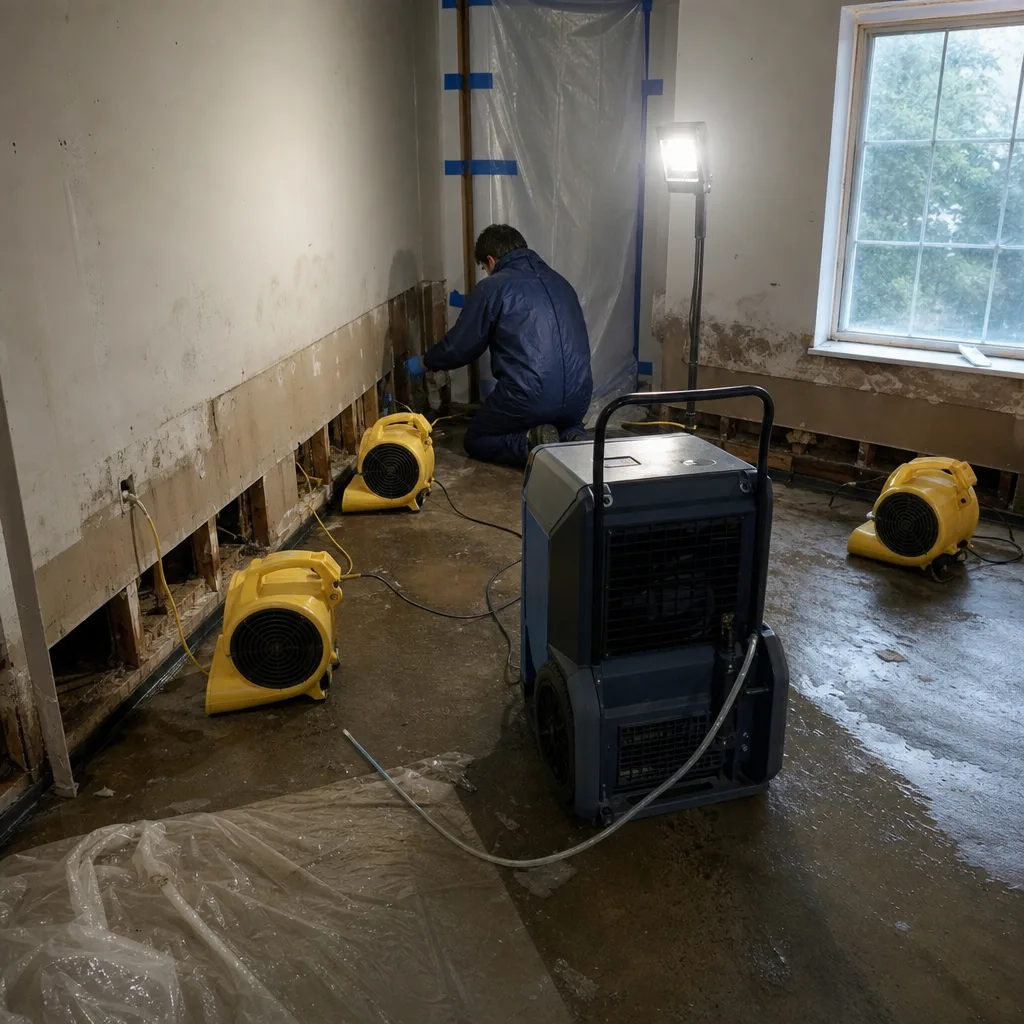
Air Quality Restoration
After mold removal, the air inside a Harrington Park home still holds spores until it is scrubbed. We run HEPA air scrubbers during remediation and continue until clearance testing shows indoor spore counts at or below outdoor baseline. This matters for the 55-to-75-year-old homeowners we serve across this borough: lungs do not need the load.
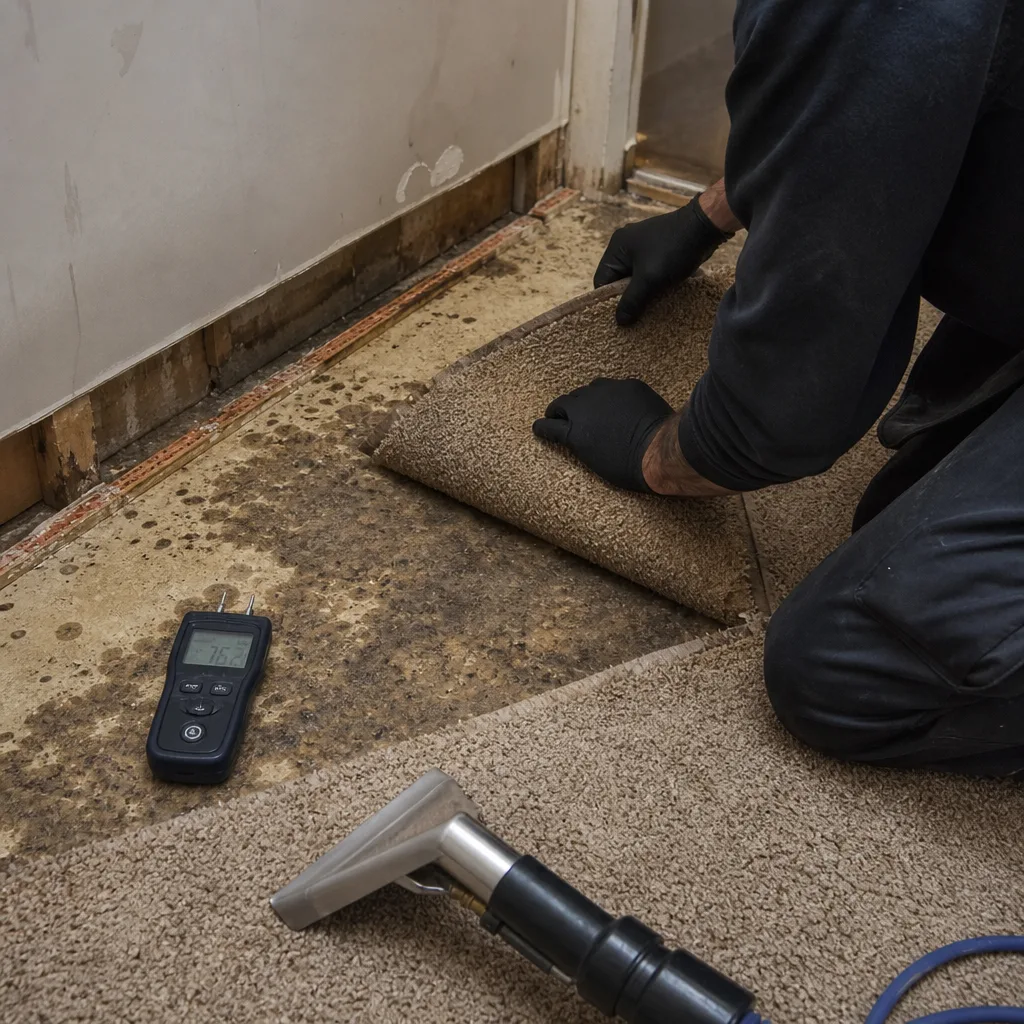
Crawl Space Treatment
Harrington Park split-levels and ranches with dirt-floor crawl spaces trap humidity through the Bergen County summer. We treat those spaces with vapor barriers, drainage correction where needed, and dehumidification sized to the square footage. Crawl space mold is the one homeowners find last, usually when a floor starts to smell. Treating the source keeps it from moving into the living space.
What happens when you call
- 1
A real person answersNo phone trees - you reach a local pro.
- 2
You get an upfront price rangeHonest numbers before anyone is dispatched.
- 3
A background-checked tech heads outLicensed & insured, dispatched right away.
- 4
You approve before work beginsNothing starts until you say go.
Mold Remediation Costs in Harrington Park, NJ
A small, contained mold job in Harrington Park, like a bathroom ceiling or a single closet with surface growth, usually runs $700-$1,600. That covers containment, removal, antimicrobial treatment, and basic air scrubbing. A finished basement with mold behind drywall, which is the most common call we get from this borough’s older colonials, typically costs $2,800-$5,200 depending on how many wall cavities are involved and whether the rim joists need treatment. Full basement remediation with structural drying, floor removal, and rebuild work can go $7,500 and up. These are not bids; they are the ranges we see from Harrington Park homes every month. What moves the price: how much drywall comes out, whether the insulation is saturated, how long the moisture was present, and whether a crawl space or HVAC system is involved. The free inspection gives you a firm written scope with a line-item price. No surprises on the bill. Senior and veteran discounts of 5% always apply, and $50 off any repair over $250 is standing.
We Also Serve Cities Near Harrington Park
Our crews work throughout the Pascack Valley and northern Bergen County. If you live in Northvale, Hillsdale, Park Ridge, or Woodcliff Lake, the same team, the same 24/7 live dispatch, and the same 90-Day Done Right Promise reach your door. Call (914) 935-7914 and a live person answers.
Serving Harrington Park, NJ - Our Local Coverage Area
We’re based in the Harrington Park area and know this community well. Use the map below to see our service coverage - if you’re nearby, we can almost certainly help.
Harrington Park Mold Remediation Questions, Answered
Why does mold keep coming back in my Harrington Park basement after a heavy rain?
Because the water is not coming from inside your basement; it is coming through the foundation walls. Harrington Park’s clay-heavy soils hold groundwater against concrete block for days after a storm, and once mortar joints open even slightly, moisture wicks into wall cavities every time the ground saturates. Removing the surface mold without fixing the water path guarantees the mold returns. Our crew addresses both: remediation of the affected materials and moisture control at the source, whether that means drainage correction, vapor barrier, or dehumidification.
Do I need a mold inspection before finishing my Harrington Park basement?
Yes, and we recommend it strongly for any home built before 1980. The borough’s original foundations rarely have modern interior drainage, and moisture hiding behind a dry block face will be sealed into a finished wall cavity where mold can grow undisturbed. A pre-finish inspection with moisture mapping and thermal imaging costs a fraction of what a post-finish remediation costs. Call (914) 935-7914 to schedule one.
What’s different about mold remediation in Harrington Park homes built before 1980?
The difference is the foundation. Pre-1980 Harrington Park colonials and Cape Cods sit on poured concrete or concrete block with no waterproofing membranes as we use them today. Mortar joints have opened over sixty years, and parging has worn thin. The wall wicks groundwater silently. Remediation in these homes means opening finished walls to inspect the entire cavity, not just treating the visible patch, because the visible patch is almost never the full extent.
How fast does mold grow after a basement flood in Harrington Park?
Visible mold can start within 48 to 72 hours in the right conditions, which Harrington Park basements provide in summer and after storms. Damp drywall, humidity over 60%, and stagnant air are all it takes. That is why the first 48 hours are the window. If you had water in the basement and it was not professionally dried, get a mold inspection now. Our free visual inspection will tell you what you are dealing with.
Can I handle a small mold spot in my Harrington Park crawl space myself?
You can, but it will likely come back, and you may make it worse. Bleach does not kill mold below the surface of wood fibers, and without fixing the moisture source in the crawl space, the growth returns within weeks. Worse, disturbing the mold releases spores into the air without containment. For small surface spots that are genuinely isolated, cleaning with a proper antimicrobial and correcting the moisture is possible. For anything else, call us for a free assessment.
How fast can you reach my Harrington Park home?
Within 45 minutes is our commitment, and in a borough of under two square miles, we are usually faster. A live dispatcher routes the closest available crew the moment you call (914) 935-7914. We do not use automated answering systems, and we do not put emergency calls in a queue.
Will my homeowners insurance cover mold remediation in Harrington Park?
It depends on the cause. Most policies cover mold remediation when it results from a sudden, covered water event, such as a burst pipe or storm-driven seepage. They generally do not cover mold from a long-term slow leak or chronic seepage that maintenance should have addressed. Our documentation, including daily moisture logs and the written scope, helps establish the timeline your carrier needs. We bill them directly and coordinate with your adjuster.
What should I do in the first 30 minutes after finding mold in my Harrington Park basement?
Do not disturb the area, and do not run the furnace blower or any fan that could push spores into the rest of the house. Close the basement door if you can. Call (914) 935-7914 and describe what you see and smell. We will tell you what to do next and get a crew out for a free visual inspection. The first call is the most important step.
Written by Curt Bowman, Owner at Floodline Restoration Co., serving Harrington Park and northern Bergen County with mold remediation, water damage restoration, and full rebuild services since 2010. Backed by the 90-Day Done Right Promise, in writing.